We Have No Time
From atomic clocks to the cosmic film reel
Our understanding of time is beginning to shift. While physicists attempt to dismantle the Universal Clock down to its smallest cogs, the idea is gaining ground that the passage of time is an illusion.
The inhabitants of the Norwegian fishing village of Sommarøy had had enough of the clock. In June 2019, they launched a petition to become the world’s first ‘time-free zone’. Sommarøy lies so far north that, in summer, the sun does not set for 69 days. Keeping track of time therefore makes little sense, the residents argued in a press release.
Unfortunately, the initiative later turned out to be a publicity stunt designed to promote tourism in the area. Even so, living a little less by the clock might not be such a bad idea. After all, the universe doesn’t seem to follow one either. The more physicists try to capture time in their theories, the more elusive it becomes.
ATOMIC TIME
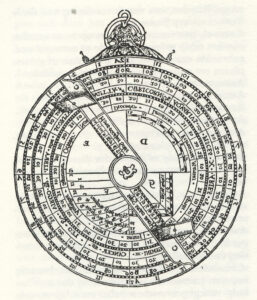
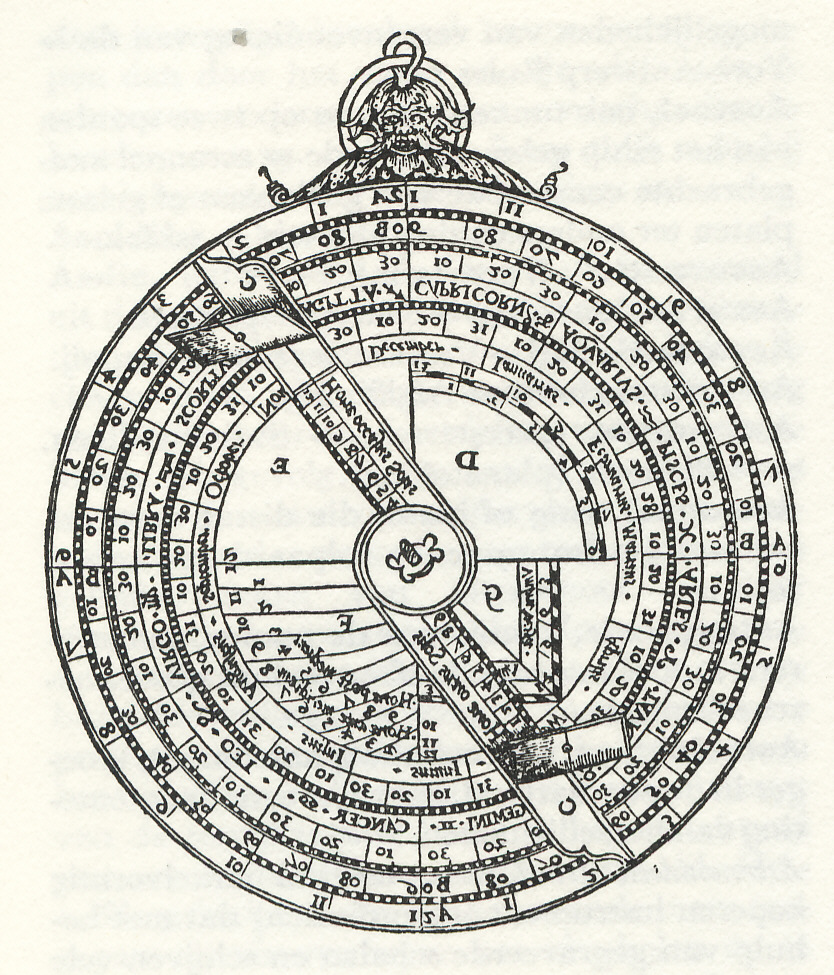
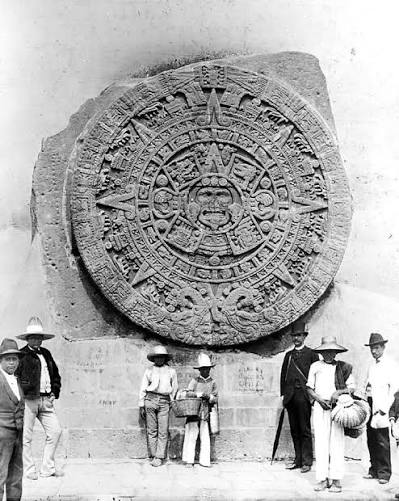
For as long as humans have existed, we have tried to get a grip on time. Prehistoric peoples kept track of days, months and years by carefully observing the sun, moon and stars. In ancient Egypt, the day was divided into 24 hours. These hours were measured using a sundial, the precursor to the clock. During the Middle Ages, minutes and seconds were introduced. These smaller units of time could no longer be read from a sundial. Other instruments were needed, such as water clocks, hourglasses and candles. In this way, timekeeping became increasingly detached from astronomy.
Thanks to a succession of inventions, from Christiaan Huygens’s pendulum clock to the quartz watch, we have since measured time with ever greater precision. Today, we have clocks based on the extraordinarily regular vibrations of atoms. Some of these atomic clocks are so accurate that, after sixty billion years, they would be no more than a second out of step. For comparison, the universe itself is only around fourteen billion years old.
These atomic clocks now also determine exactly how long a second lasts. Originally, an hour was simply one twenty-fourth of a day, a minute one sixtieth of an hour, and a second one sixtieth of a minute. But this was not a particularly practical definition, partly because fluctuations in the Earth’s rotation mean that a day is not always precisely the same length. Since 1967, therefore, a second has been defined as the time it takes a caesium atom to complete exactly 9,192,631,770 oscillations. Minutes and hours were brought into line with this new definition.
The day, however, remained tied to the Earth’s rotation: the interval between two sunrises. Strictly speaking, then, an hour is no longer one twenty-fourth of a day.
In practice, this change has had little impact. Until now, an occasional leap second has had to be added to a day whenever the Earth has been rotating ‘too slowly’ for a while. But the distinction is interesting for the way we think about time. Our system of timekeeping can now be divided into two camps: Team Astronomy and Team Physics.
Years, months and days belong to the first camp: their duration still depends on the movements of celestial bodies. Hours, minutes and seconds belong to the second: their duration depends on the vibrations of an atom.
‘With his theory of relativity, Einstein showed that time does not merely pass at different speeds in our minds. In reality, too, it passes at different rates for everyone’
SUBJECTIVE TIME
This appropriation of units of time is part of a much longer mission undertaken by Team Physics. At the heart of that mission lies something Isaac Newton called the Universal Clock: a clock against which every process in the universe can be measured. Through ever more precise measurements, Team Physics hopes to discover how this clock works, down to its tiniest cogs.
In the early twentieth century, however, this mission suffered a setback. Albert Einstein demonstrated that there is no such thing as a Universal Clock.
We are all familiar with the feeling that time sometimes drags and at other moments flies by. With his theory of relativity, Einstein showed that time does not merely pass at different speeds in our minds. In reality, too, it passes at different rates for everyone.
However complex this phenomenon may be, it can be summarised in just two sentences. First: moving clocks run more slowly than stationary ones. Second: time passes more slowly in places where gravity is stronger than elsewhere.
These differences are minute, usually no more than a few millionths of a second. But they really do exist. This was demonstrated in 1971 using, naturally, atomic clocks. Some were flown around the world in aircraft and subsequently compared with clocks that had remained on the ground.
Einstein thus revealed that time works quite differently from how we intuitively imagine it. Reality is not a film that plays at a fixed speed for everyone, but one in which every element has its own playback speed, which can change continuously.
This was a blow to Team Physics. But there was still a way around it. Equations can be used to correct for the discrepancies in time caused by movement and gravity. In this way, you can effectively introduce a Universal Clock of your own, against which all other clocks can be calibrated.
Moreover, one important aspect of time remains intact in Einstein’s theory: its direction. Time always moves forwards, never backwards. You can travel towards the future at different speeds, but never into the past. Earlier remains earlier, and later remains later.
EMERGENT TIME
Recent research, however, is beginning to challenge even this ‘arrow of time’. We experience time as irreversible, but from a physical perspective it is usually perfectly reversible.
Take the planets. As time moves forwards, they orbit the sun anticlockwise. But as a physicist, you could just as easily say that they move clockwise backwards through time. No law of physics forbids it.
There is only one field of physics in which time cannot be reversed: thermodynamics. This branch of physics describes the behaviour of large collections of particles.
Consider the particles in a cup of coffee. If you stir milk into it, the milk will always spread throughout the coffee. The reverse situation, in which stirring causes the milk to gather together in one place, is impossible. This is because disorder is statistically far more likely than order. There are many more possible cups of coffee in which the milk particles are dispersed than cups in which all the milk is concentrated in one spot.
The arrow of time rests entirely on the statistical laws of thermodynamics. But statistics only come into play when there are enough elements involved, such as a great many particles of coffee and milk.
At the level of one or a handful of particles, it makes no difference whatsoever whether you describe a phenomenon moving forwards or backwards through time. And at an even smaller scale, time itself seems impossible to describe. Try to do so, and the equations break down.
This has led to the idea that the passage of time is an emergent phenomenon. In other words, it arises from something else, something deeper.
The best-known example of such a physical illusion is temperature. What we experience as heat and cold is actually the degree of movement within a large group of molecules. In summer in the Netherlands, air molecules move faster than they do in winter in Sommarøy.
Temperature, then, is not a fundamental property of the universe. At the smallest scale, it does not exist. You cannot speak of the temperature of a single atom.
Many physicists are now beginning to think about time in the same way. One of them is the Italian physicist Carlo Rovelli. He has strengthened this idea by developing a new physical description of reality at its smallest scale. In this description, time is conspicuous by its absence.
Perhaps, then, we should not think of reality as a film at all. Perhaps it is more like a reel of film, on which past, present and future all exist simultaneously.
The great question is: why don’t we experience it that way? What is the cosmic projector that plays the reel for us in a single direction?
Rovelli believes that the arrow of time emerges from interactions between elementary particles. Just as the movement of large numbers of particles gives rise to temperature, their interactions with one another may create our illusion of time.
This idea fits with Rovelli’s ‘relational’ view that nothing in the universe can be described in isolation. According to him, the same applies to time.
In everyday terms, it would be as though you could not say, ‘Let’s meet at twelve o’clock’, because ‘twelve o’clock’ has no meaning on its own. Instead, you would have to relate that moment to something that actually exists, such as ‘Let’s meet when the sun is at its highest point’.
‘Instead of living by the clock, we could pay a little more attention to the rhythms of the sun, moon and stars’
FREE TIME
In their determined attempts to dismantle the Universal Clock, Team Physics has, in a sense, shot itself in the foot. It has reached a fundamental boundary. Ultimately, time appears to be an illusion.
You might wonder whether this has any bearing on everyday life. Of course, it doesn’t have to. You can simply go along with the illusion, just as you can enjoy warm summer temperatures.
But we could also take the elusive nature of time as an opportunity to loosen our grip on it.
Perhaps the difficult circumstances in which Team Physics now finds itself will lead to a revival of Team Astronomy. Instead of living by the clock, we could pay a little more attention to the rhythms of the sun, moon and stars. This would also be in keeping with Rovelli’s view that time must always be understood in relation to something that exists.
Such a way of life would bring us closer not only to physics, but also to nature. And there are clear benefits to that.
Our sleep–wake cycle has evolved in response to the presence of sunlight, and perhaps to some extent moonlight too, although the evidence for the latter is limited. Put simply, our bodies want to be active when it is light outside and to rest when it is dark.
With clocks and artificial lighting, we now impose a different rhythm on ourselves. Yet these inventions are only a few hundred years old, the blink of an eye in evolutionary terms. Our bodies have not yet adapted to them. The pendulum clock and our biological clock are caught in an ‘evolutionary mismatch’.
For many people, it may therefore feel better to bring their daily activities more closely into line with daylight. In other words, to do less before sunrise and after sunset, and to be less active in winter than in summer.
In this respect, we could learn something from the people of Sommarøy. The abolition of time may have been a publicity stunt, but the inhabitants really do live less by the clock.
During the summer, you can see people mowing their lawns and children playing outside in the bright light of the night. In the dark winter months, life is a little quieter.
The fact that the ‘time-free zone’ made headlines around the world may tell us something about how we feel about our own way of life. Perhaps, deep down, many of us have simply had enough of the clock.
This story is from See All This #43 – All the Time in the World (Dutch Print Edition)
Recent stories
-
![]()
Vivian Suter: Look Closer no. 4
-
![]()
Olafur Eliasson: Look Closer no. 3
-
![Tatiana Trouvé | foto: Hélène Pambrun & Thomas Merle, met dank aan de kunstenaar]()
Tatiana Trouvé at Xavier Hufkens: Look Closer no. 2
-
![]()
Kent Guide: From Margate to Manor
-
![Alberto Giacometti, Hour of the Traces, 1932, gips, hout en staal, 69 x 36 x 29 cm]()
That One Moment: Chronos and Kairos
-
![]()
We Have No Time: From atomic clocks to the cosmic film reel
-
![Bar Magritte Hotel, Amigo, Brussels]()
Brussels Bound: City guide
-
![]()
A harmonic universum: A one-of-a-kind pocket watch
-
![]()
William Kentridge: Look Closer no. 1
-
![Marisol Foto: Nancy Astor]()
Between Glamour and Rebellion: Marisol at Depot Boijmans
-
![Helen Frankenthaler met April Mood in haar studio op East 83rd Street in New York, 1974 | © 2026 Helen Frankenthaler Foundation, Inc./ProLitteris, Zurich | foto: Alexander Liberman © J. Paul Getty Trust]()
Helen Frankenthaler & Donald Judd at Kunsthal KAdE: Radical and rigorous
-
![Zeeplokaal]()
Li’s Forecast #11: In praise of soap
-
![Piet Oudolf garden at Noma, Copenhagen]()
Piet Oudolf’s 16 favourite plants: Create your own Oudolf garden
-
![William Kentridge, Waiting for the Sibyl]()
BREAKING #338: She has all the answers
-
![Nicole Ex (rechts) en Sarah Knigge (links) ergens tussen spiegelbeeld, stippen en oneindigheid in Yayoi Kusama’s nieuwe Infinity Mirror Room in het Stedelijk Museum Amsterdam, 9 september 2026]()
BREAKING #337: Yayoi Kusama
-
![]()
BREAKING #336: Body language
-
![Getty Research Institute, Los Angeles, schenking van de Roy Lichtenstein Foundation ter nagedachtenis aan Harry Shunk en Janos Kender | Foto: Shunk-Kender © J. Paul Getty Trust]()
Endlessly innovative: Yayoi Kusama in Amsterdam
-
![Marisol Escobar met haar sculptuur The Kennedyʼs, 1964 | © foto: Sam Falk]()
In the Kitchen with Marisol Escobar: ‘I decided never to talk again’
-
![Justine Kurland, {{Orchard}}, 1998, chromogenic print, 76.2 × 101.6 cm]()
BREAKING #334: The Orchard Project, Part II
-
![Wolfgang Tillmans, Inner City Apple Tree, 2004]()
BREAKING #333: An orchard for the future