BREAKING #333
An orchard for the future
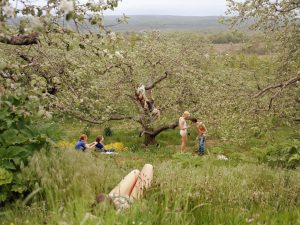
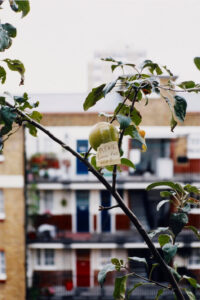
To celebrate BREAKING Art Newsletter #333, we want to bring something rare back to life together with you, our readers: a historic orchard for the future. We’re giving away 33 apple trees, with the hope of eventually planting 333 fruit trees. A collective ‘Act of Care’, in collaboration with Staatsbosbeheer.
I thought of the extraordinary number of this newsletter: #333. Of the network of tens of thousands of readers who open it every week. And, inspired by photographer Sebastião Salgado’s reforestation project, an old dream caught fire. I called a friend of mine, a forest ranger in Brabant. A man who knows how to make meadows fill with wild orchids and poppies return to fields of grain.
‘I’m thinking of growing a forest of 333 paulownias,’ I said. ‘A beautiful tree, he agreed.’ ‘They were planted at imperial tombs in China, and in Japan their wood has been used to build houses for centuries.’ ‘But if you could choose between paulownias, oaks or fruit trees?’ I asked. ‘Then I’d choose a native species. What about the rare European crab apple, Malus sylvestris.
Through one contact after another, I found my way to biologist Bert Maes. He was closely involved with the gene bank of Staatsbosbeheer, a living collection preserving the unique genetic heritage of native Dutch trees and shrubs. The European crab apple is propagated there too, from material gathered from the few original populations that have survived. Only around 150 remain.
The European crab apple has been growing here for some 9,500 years. That makes the species thousands of years older than our famous dolmens. It has, quite literally, weathered hotter and colder times. Its ancestors survived the Ice Age in more southerly parts of Europe. As the climate warmed, the species spread northwards again. Traces of that post-glacial journey can still be found in its DNA.
We often think the future calls for something new. New solutions, new species, new ways of making our landscapes more resilient to a changing climate. But resilience also begins with knowing what is already here. With recognising what has endured for centuries, and understanding that when you protect one link, you help preserve an entire ecosystem.
– Nicole Ex,
founding editor
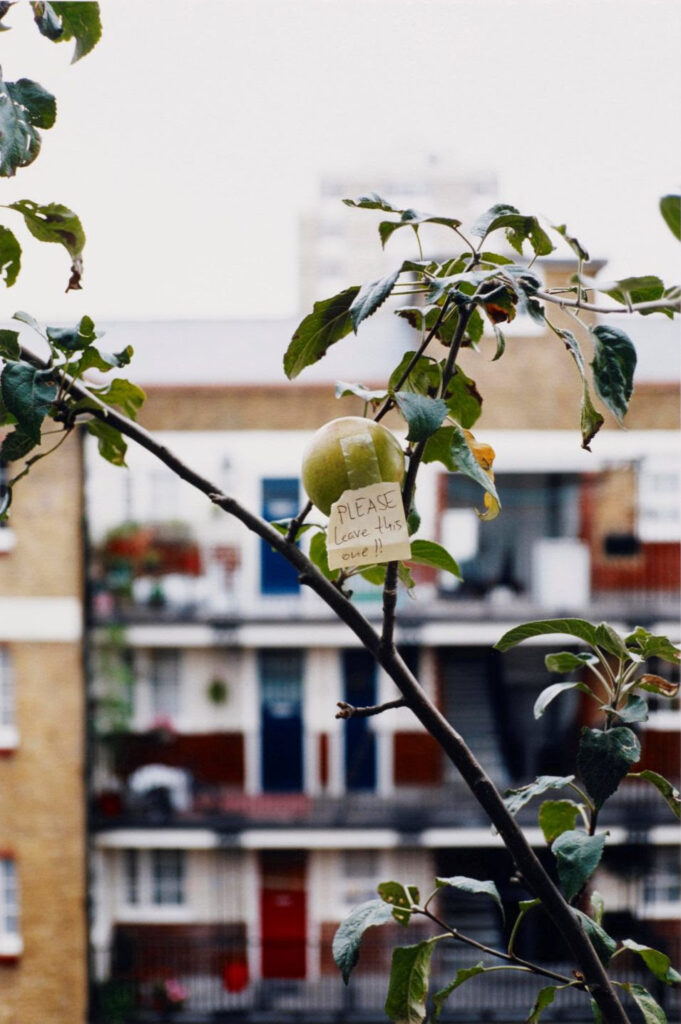
how can you take part?
Do you have, or know of, a sunny spot where this rare tree could be given a place for the future? Somewhere with enough space, water and care? Let us know. Send us an email and tell us why you would like to become one of its guardians.
From all submissions, we will choose 33 different locations and 33 guardians for these historic trees. We will bring the 33 young trees together on a single map, alongside the places where the last old wild fruit trees are still growing. Our aim is to plant 333 fruit trees together over the coming years, creating a dispersed orchard for the future.
Know someone who might have just the right place for one? Forward this Art Newsletter via this link >
And keep an eye out for part II next week. We’ll tell you more about this tree and explain exactly how the project will work. The selected guardians will hear from us in early September.
Recent stories
-
![Tatiana Trouvé | foto: Hélène Pambrun & Thomas Merle, met dank aan de kunstenaar]()
Tatiana Trouvé at Xavier Hufkens: Look Closer no. 2
-
![]()
Kent Guide: From Margate to Manor
-
![Alberto Giacometti, Hour of the Traces, 1932, gips, hout en staal, 69 x 36 x 29 cm]()
That One Moment: Chronos and Kairos
-
![Bar Magritte Hotel, Amigo, Brussels]()
Brussels Bound: City guide
-
![]()
A harmonic universum: A one-of-a-kind pocket watch
-
![]()
William Kentridge: Look Closer no. 1
-
![Marisol Foto: Nancy Astor]()
Between Glamour and Rebellion: Marisol at Depot Boijmans
-
![Helen Frankenthaler met April Mood in haar studio op East 83rd Street in New York, 1974 | © 2026 Helen Frankenthaler Foundation, Inc./ProLitteris, Zurich | foto: Alexander Liberman © J. Paul Getty Trust]()
Helen Frankenthaler & Donald Judd at Kunsthal KAdE: Radical and rigorous
-
![Zeeplokaal]()
Li’s Forecast #11: In praise of soap
-
![Piet Oudolf garden at Noma, Copenhagen]()
Piet Oudolf’s 16 favourite plants: Create your own Oudolf garden
-
![William Kentridge, Waiting for the Sibyl]()
BREAKING #338: She has all the answers
-
![Nicole Ex (rechts) en Sarah Knigge (links) ergens tussen spiegelbeeld, stippen en oneindigheid in Yayoi Kusama’s nieuwe Infinity Mirror Room in het Stedelijk Museum Amsterdam, 9 september 2026]()
BREAKING #337: Yayoi Kusama
-
![]()
BREAKING #336: Body language
-
![Getty Research Institute, Los Angeles, schenking van de Roy Lichtenstein Foundation ter nagedachtenis aan Harry Shunk en Janos Kender | Foto: Shunk-Kender © J. Paul Getty Trust]()
Endlessly innovative: Yayoi Kusama in Amsterdam
-
![Marisol Escobar met haar sculptuur The Kennedyʼs, 1964 | © foto: Sam Falk]()
In the Kitchen with Marisol Escobar: ‘I decided never to talk again’
-
![Justine Kurland, {{Orchard}}, 1998, chromogenic print, 76.2 × 101.6 cm]()
BREAKING #334: The Orchard Project, Part II
-
![Wolfgang Tillmans, Inner City Apple Tree, 2004]()
BREAKING #333: An orchard for the future
-
![]()
Which room did you fall in love with?: Send us your all-time favourite cinematic room
-
![]()
BREAKING #332: In love with a room
-
![De studio van Carlo Maria Morsiani, Modena, juli 2026 | foto: Nicole Ex]()
BREAKING #331: The shape of clouds