Endlessly innovative
Yayoi Kusama in Amsterdam
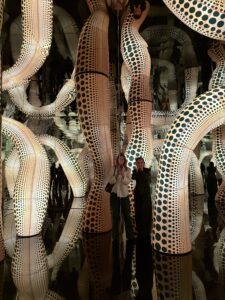
Dots, mirrors, pumpkins: it is tempting to reduce Yayoi Kusama to these elements. The Stedelijk Museum Amsterdam is once again unveiling her universe – one that is more radical, more physical and more disruptive than her iconic works might suggest.
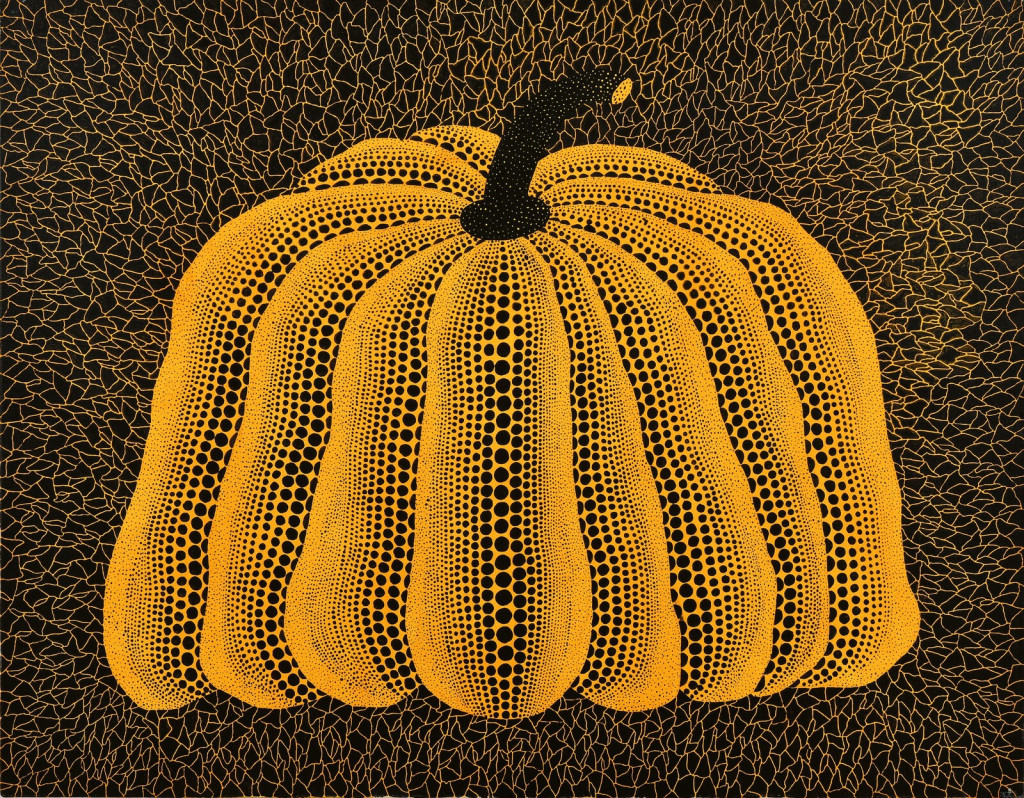
Just how varied, complex and layered the work of Yayoi Kusama (1929-2026) is becomes clear not only from the exhibition but also from the accompanying catalogue. It brings together a range of voices from outside the visual arts to consider her work from different perspectives. Experts from fields including botany, fashion, the social sciences and astrophysics reflect on her life and work.
‘There are so many different ways of looking at Kusama’s work. Art history doesn’t have to be the only lens,’ says curator Leontine Coelewij. In this way, her now iconic Infinity Mirror Rooms, pumpkins and dizzying patterns of dots are placed within a much broader context.
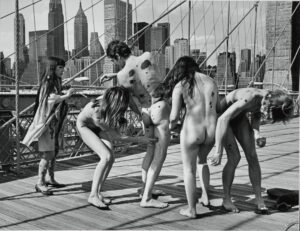
Kusama was born in Matsumoto, Japan. She began drawing at an early age. The nature around her and the visions she experienced were important sources of inspiration. She knew from early on that she wanted to be an artist. After the Second World War she left for the United States, where she staged much-discussed performances, among them actions in which she painted dots on naked people in public space. In 1968 she also read out her Open Letter to My Hero, Richard Nixon, in which she wrote: ‘Our earth is like one little dot among millions of other celestial bodies, a sphere full of hatred and struggle amid the peaceful, silent spheres. Let us change all that and make of this world a new Garden of Eden.’
‘It is remarkable to see how Kusama, as a young woman in America, made a radical and perhaps also feminist form of avant-garde art, though she would never have called it that herself,’ says Coelewij. ‘She was ahead of many of the movements that emerged later, from Pop art and Minimalism to installation art. That made her an important trailblazer for many other artists.’
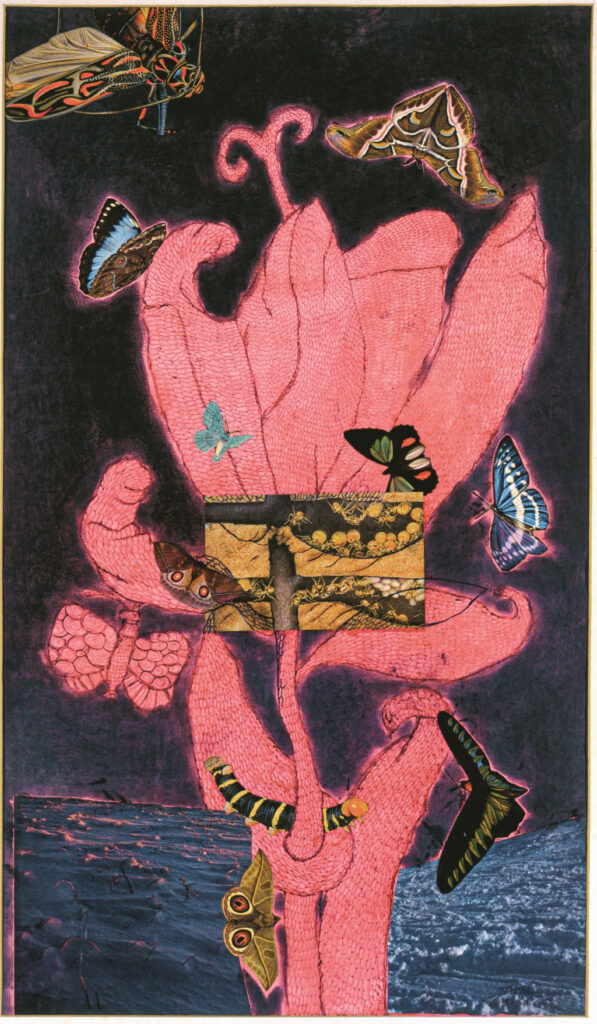
For this solo exhibition, the Stedelijk team worked closely with Kusama and her studio in Tokyo until shortly before her death. As a result, the exhibition includes works never before shown in Europe, among them drawings, ceramics and etchings. It also turns to the groundbreaking performances Kusama staged in New York during the 1960s and 1970s, when she found herself at the heart of the American avant-garde.
The scale of the exhibition is striking too: it extends across two floors. The lower floor offers visitors a wide-ranging view of her work. The route then leads via the mezzanine to the upper floor, taken up entirely by an immense Infinity Room. Kusama made this new work especially for the exhibition. ‘When you step into this space, you enter a kind of Alice in Wonderland world: an overwhelming realm of colour and light,’ says Coelewij. ‘What makes her artistry extraordinary is that she keeps renewing herself. She sees her art as a means of making contact with other people and of connecting with the nature around us. That is the singular message held within her work.’
The new season in ten exhibitions: discover them in the upcoming issue of See All This. Order your copy in our shop >
Recent stories
-
![Tatiana Trouvé | foto: Hélène Pambrun & Thomas Merle, met dank aan de kunstenaar]()
Tatiana Trouvé at Xavier Hufkens: Look Closer no. 2
-
![]()
Kent Guide: From Margate to Manor
-
![Alberto Giacometti, Hour of the Traces, 1932, gips, hout en staal, 69 x 36 x 29 cm]()
That One Moment: Chronos and Kairos
-
![Bar Magritte Hotel, Amigo, Brussels]()
Brussels Bound: City guide
-
![]()
A harmonic universum: A one-of-a-kind pocket watch
-
![]()
William Kentridge: Look Closer no. 1
-
![Marisol Foto: Nancy Astor]()
Between Glamour and Rebellion: Marisol at Depot Boijmans
-
![Helen Frankenthaler met April Mood in haar studio op East 83rd Street in New York, 1974 | © 2026 Helen Frankenthaler Foundation, Inc./ProLitteris, Zurich | foto: Alexander Liberman © J. Paul Getty Trust]()
Helen Frankenthaler & Donald Judd at Kunsthal KAdE: Radical and rigorous
-
![Zeeplokaal]()
Li’s Forecast #11: In praise of soap
-
![Piet Oudolf garden at Noma, Copenhagen]()
Piet Oudolf’s 16 favourite plants: Create your own Oudolf garden
-
![William Kentridge, Waiting for the Sibyl]()
BREAKING #338: She has all the answers
-
![Nicole Ex (rechts) en Sarah Knigge (links) ergens tussen spiegelbeeld, stippen en oneindigheid in Yayoi Kusama’s nieuwe Infinity Mirror Room in het Stedelijk Museum Amsterdam, 9 september 2026]()
BREAKING #337: Yayoi Kusama
-
![]()
BREAKING #336: Body language
-
![Getty Research Institute, Los Angeles, schenking van de Roy Lichtenstein Foundation ter nagedachtenis aan Harry Shunk en Janos Kender | Foto: Shunk-Kender © J. Paul Getty Trust]()
Endlessly innovative: Yayoi Kusama in Amsterdam
-
![Marisol Escobar met haar sculptuur The Kennedyʼs, 1964 | © foto: Sam Falk]()
In the Kitchen with Marisol Escobar: ‘I decided never to talk again’
-
![Justine Kurland, {{Orchard}}, 1998, chromogenic print, 76.2 × 101.6 cm]()
BREAKING #334: The Orchard Project, Part II
-
![Wolfgang Tillmans, Inner City Apple Tree, 2004]()
BREAKING #333: An orchard for the future
-
![]()
Which room did you fall in love with?: Send us your all-time favourite cinematic room
-
![]()
BREAKING #332: In love with a room
-
![De studio van Carlo Maria Morsiani, Modena, juli 2026 | foto: Nicole Ex]()
BREAKING #331: The shape of clouds