Between Glamour and Rebellion
Marisol at Depot Boijmans
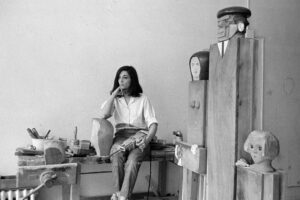
Again and again, Marisol returned to the same question in her work: who am I? Warhol called her ‘the first girl artist with glamour’. She became a sensation, then all but disappeared from view. Now, the Depot at Museum Boijmans Van Beuningen in Rotterdam brings her work back into focus.
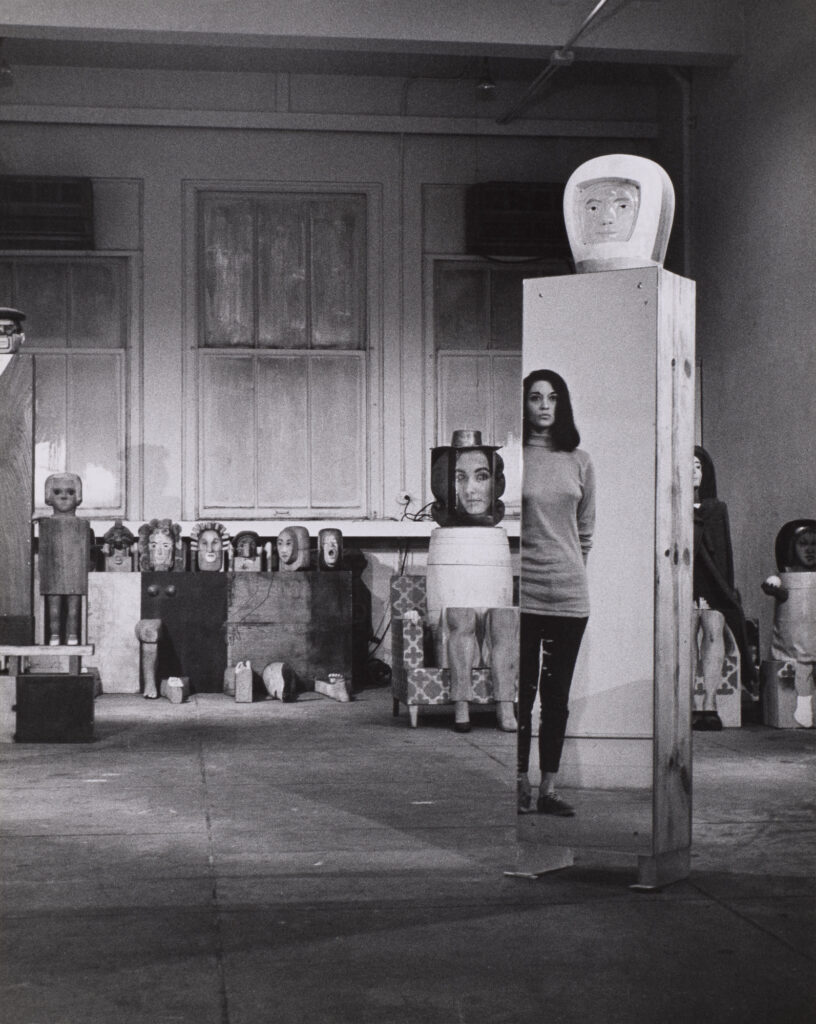
‘There comes a point where you start asking, “Who am I?” That’s why I made all those masks and each one is different. Every time I took a cast of my face it came out different. You have a million faces.’
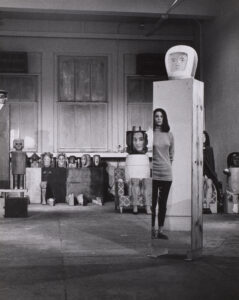
Museum Boijmans Van Beuningen in Rotterdam is an old friend of Marisol (1930-2016). The museum hosted her first solo exhibition at the peak of her career in 1968 and holds a piece of her work, The Car, in its permanent collection. The Car is a literal and metaphorical vehicle for self-investigation, its passengers all played by a version of Marisol.
After Marisol’s death in 2016, she left her estate to the Buffalo AKG Art Museum, which spent years archiving and researching the work before mounting a US retrospective. European interest followed, and the show moved to Copenhagen and Zürich before arriving in Rotterdam. Esmee Postma, curator of the Boijmans presentation, has known Marisol’s work for twelve years, long before this project existed. ‘I knew Marisol, but at the same time, I didn’t,’ she said. ‘Most people had forgotten who she was, even inside the museum.’
‘I was born an artist. Afterwards, I had to explain to everyone just what that meant.’ Marisol worked at the edge of Pop Art but never fit into one category. Above all, she was a sculptor working across wood, bronze, plaster, drawing, and photography.
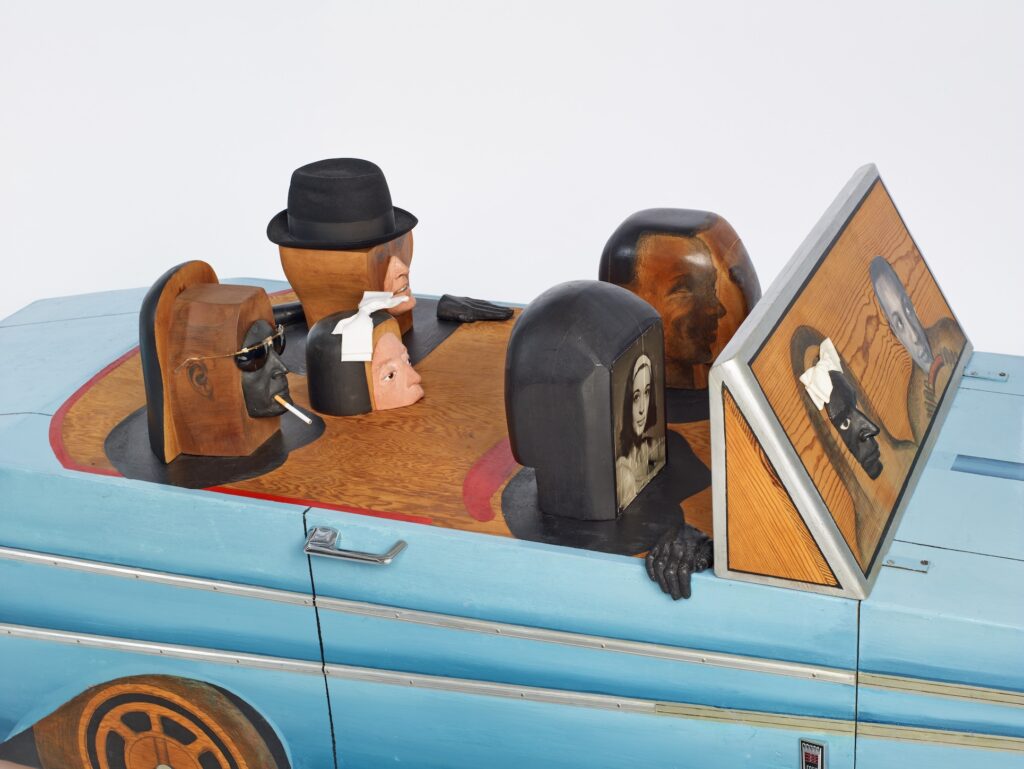
Marisol used her artwork to answer a question she returned to throughout her life: Who am I? She incorporated objects like discarded wood from New York streets and cast her own face and hands, leaving traces of herself throughout the work.
The Boijmans show opens with a bronze sculpture, Mi Mamá y Yo (My Mother and I), where Marisol stands on a bench beside her seated mother, holding a lattice umbrella that offers no real shade. Her mother’s face is smiling. Marisol’s is scowling. In this work, the artist gave her mother a cast of her own hands and feet. ‘This work has deep emotional meaning,’ Postma says. ‘It’s very dense. Very emotionally charged.’
Throughout her career the industry focused more on Marisol’s looks than her art. Warhol called her ‘the first girl artist with glamour, though Marisol was famous before he was, and it’s said he modeled his own persona on hers. She rejected being called a feminist, yet made work that spoke to the struggles of women, the roles assigned to them, and the expectations put on them. She turned the media’s fixation with her beauty into strategy, appearing at times in a ball gown and sometimes in a hoodie, flannel shirt and denim, dirty from a week of making art. ‘She tried on all these different personas,’ Esmee says, ‘almost like outfits.’
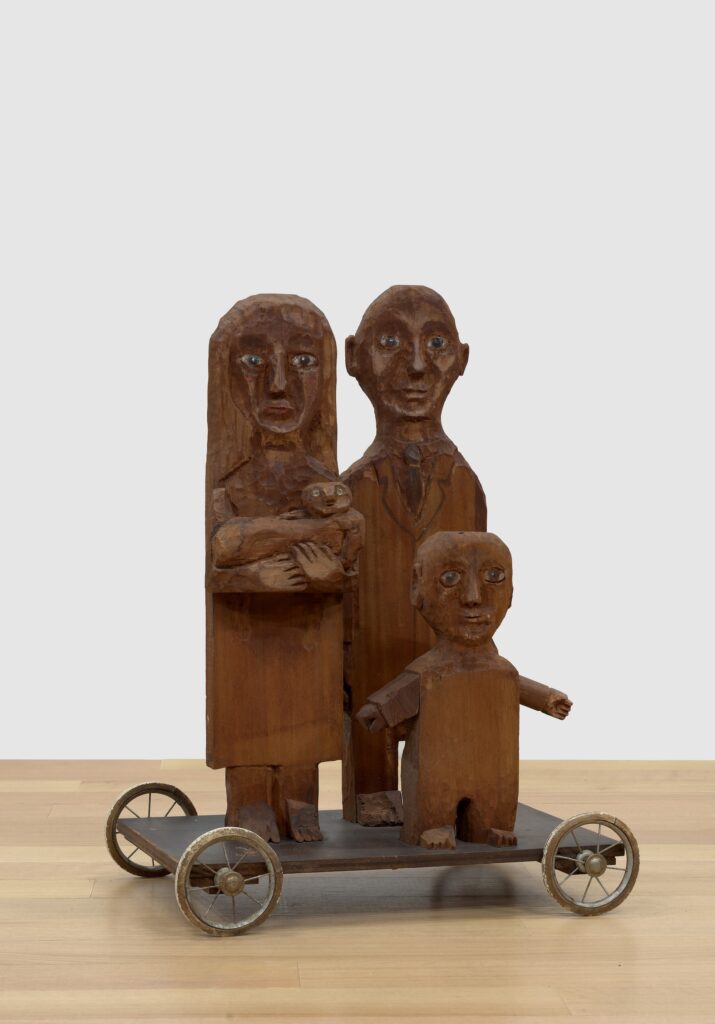
Marisol became famous almost overnight and disappeared from the public eye just as fast. But her disappearance wasn’t because she stopped making art. By the time she died, she had hundreds of sculptures, works on paper, and thousands of photographs, slides and films.
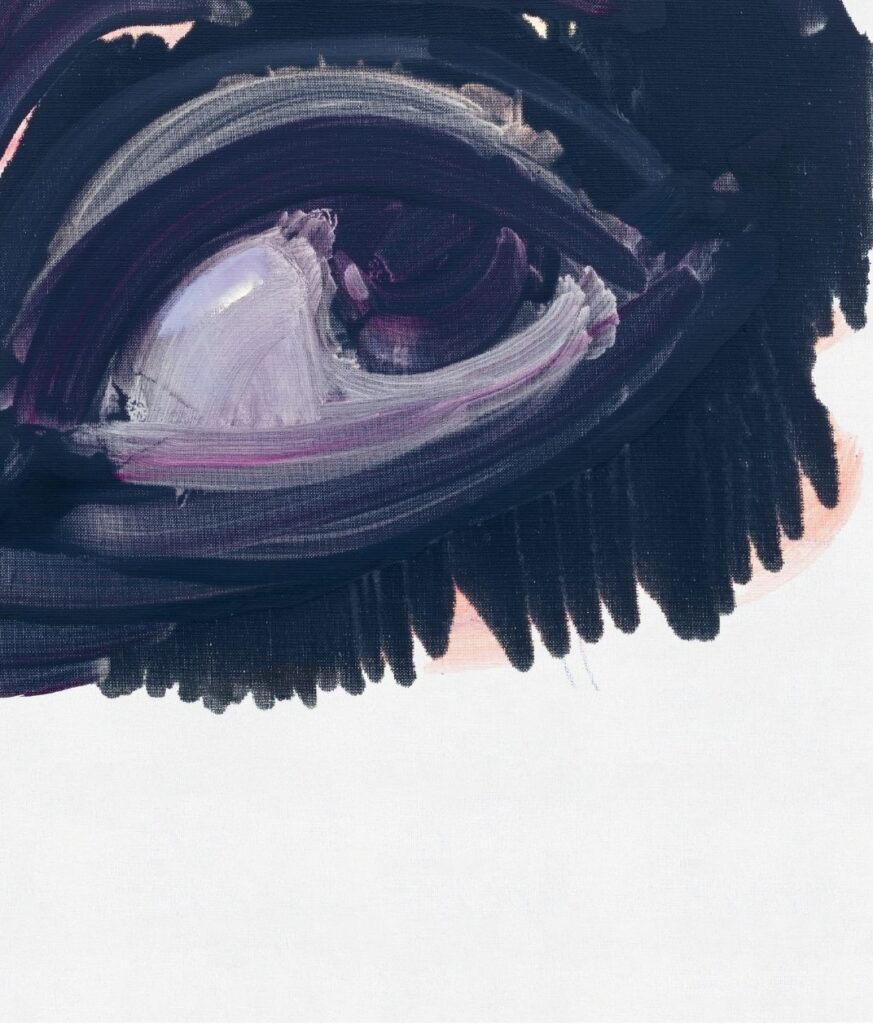
The sculptures are life-size, and standing before them, Postma says, feels less like looking at a sculpture and more like you’re being looked at. ‘Very frontal, direct eyes.’
Postma points out how there’s plenty to love and laugh about in the show, but she hopes visitors also see the critical layer, which wasn’t always recognized at the time these works were first made. Postma notes there is a ‘socially conscious, sometimes hidden message in almost every piece.’
Marisol is on view from 9 October 2026 until 29 March 2027 at the Depot of Museum Boijmans Van Beuningen in Rotterdam.
Recent stories
-
![]()
Olafur Eliasson: Look Closer no. 3
-
![Tatiana Trouvé | foto: Hélène Pambrun & Thomas Merle, met dank aan de kunstenaar]()
Tatiana Trouvé at Xavier Hufkens: Look Closer no. 2
-
![]()
Kent Guide: From Margate to Manor
-
![Alberto Giacometti, Hour of the Traces, 1932, gips, hout en staal, 69 x 36 x 29 cm]()
That One Moment: Chronos and Kairos
-
![Bar Magritte Hotel, Amigo, Brussels]()
Brussels Bound: City guide
-
![]()
A harmonic universum: A one-of-a-kind pocket watch
-
![]()
William Kentridge: Look Closer no. 1
-
![Marisol Foto: Nancy Astor]()
Between Glamour and Rebellion: Marisol at Depot Boijmans
-
![Helen Frankenthaler met April Mood in haar studio op East 83rd Street in New York, 1974 | © 2026 Helen Frankenthaler Foundation, Inc./ProLitteris, Zurich | foto: Alexander Liberman © J. Paul Getty Trust]()
Helen Frankenthaler & Donald Judd at Kunsthal KAdE: Radical and rigorous
-
![Zeeplokaal]()
Li’s Forecast #11: In praise of soap
-
![Piet Oudolf garden at Noma, Copenhagen]()
Piet Oudolf’s 16 favourite plants: Create your own Oudolf garden
-
![William Kentridge, Waiting for the Sibyl]()
BREAKING #338: She has all the answers
-
![Nicole Ex (rechts) en Sarah Knigge (links) ergens tussen spiegelbeeld, stippen en oneindigheid in Yayoi Kusama’s nieuwe Infinity Mirror Room in het Stedelijk Museum Amsterdam, 9 september 2026]()
BREAKING #337: Yayoi Kusama
-
![]()
BREAKING #336: Body language
-
![Getty Research Institute, Los Angeles, schenking van de Roy Lichtenstein Foundation ter nagedachtenis aan Harry Shunk en Janos Kender | Foto: Shunk-Kender © J. Paul Getty Trust]()
Endlessly innovative: Yayoi Kusama in Amsterdam
-
![Marisol Escobar met haar sculptuur The Kennedyʼs, 1964 | © foto: Sam Falk]()
In the Kitchen with Marisol Escobar: ‘I decided never to talk again’
-
![Justine Kurland, {{Orchard}}, 1998, chromogenic print, 76.2 × 101.6 cm]()
BREAKING #334: The Orchard Project, Part II
-
![Wolfgang Tillmans, Inner City Apple Tree, 2004]()
BREAKING #333: An orchard for the future
-
![]()
Which room did you fall in love with?: Send us your all-time favourite cinematic room
-
![]()
BREAKING #332: In love with a room