Olafur Eliasson
Look Closer no. 3
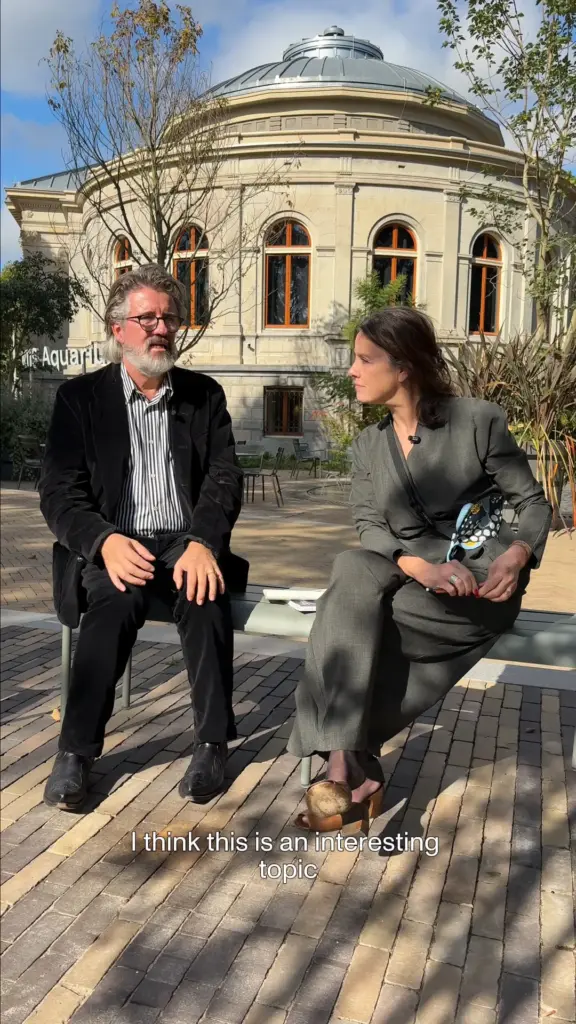
In Look Closer, an artist chooses a single work for us to look at closely. In this episode, Danish-Icelandic artist Olafur Eliasson (1967) guides us through Deep seeing currents, his new installation at the ARTIS Aquarium in Amsterdam. A descent into the deep sea, it brought him face to face with his own deepest fears: ‘When I think about my own fears, I realise that I have a fear of disconnection.’
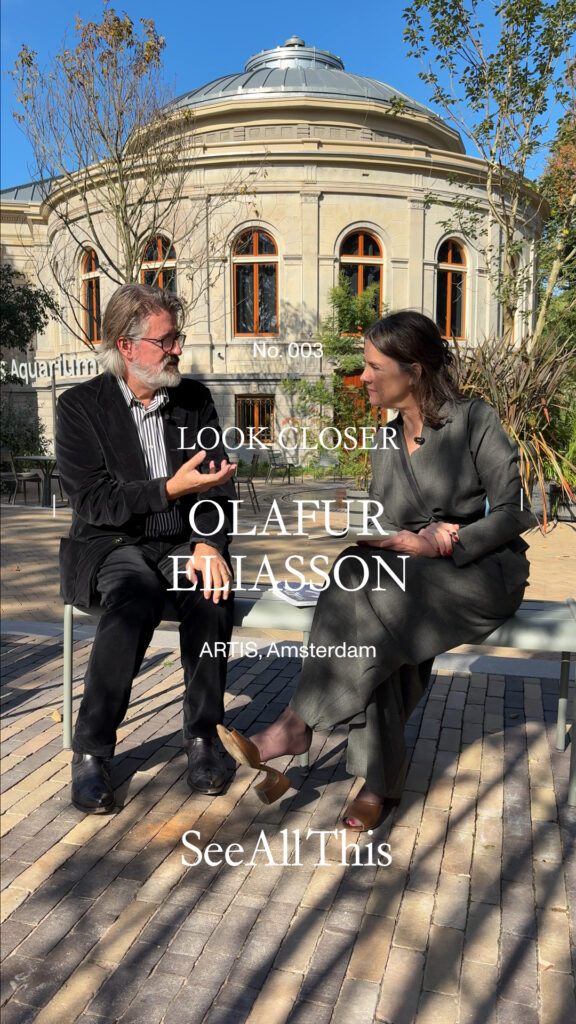
You call your work Deep Seeing Currents. What are we looking at?
First of all, it's a dark space, except when there's a little bit of light. It's centred around the experience of the deep sea.
In aquariums, there's rarely a space dedicated to the deep sea because it's very difficult to make it accessible. First of all, hardly anybody has been there, and there's very little data about it. We know there's enormous pressure, there's no light, and we don't even know exactly which species live down there, or how much life there is.
But we hear whales, don't we?
Yes. What we do have is a lot of sound recordings. Because of the density of water, especially in the deep sea, sound travels extremely well, much better and faster than in air. This means you can hear things from very far away, even across an ocean.
For instance, the sound of a blue whale is a very low frequency, like a deep bass. You can hear it from across the Pacific. It's unbelievable.
We collaborated with six or seven marine institutes that make recordings of the deep sea, and received several hundred very unusual recordings. Those are the sounds you hear in the installation. There's no additional sound. I haven't added anything. Everything you hear is an actual recording from the deep sea.
It's important to understand the difference between sound travelling through air and through water. Let's say I yell in a quiet room. You might hear me from 150 or 200 metres away, perhaps 300 metres if I really shout. But if I were underwater and yelled at the same volume, you could hear me from 300 kilometres away.
That’s incredible.
So imagine a blue whale, which is basically an enormous loudspeaker. When it makes a sound, that sound travels thousands of kilometres. It can literally travel across the Pacific.
That's amazing. I can hardly imagine it. Did you discover other things that really surprised you, beyond the way sound travels?
There's the science of it, which interested me, but I'm not a scientist. I work as an artist. So I was interested in what the deep sea represents from a human perspective.
What does it mean that there are places on Earth we know so little about? What does this unknown actually represent?
Somehow there's more attention given to travelling to the Moon or Mars than to exploring the deep ocean. Perhaps that has something to do with ideas about profitability and cost.
But I'm also interested in whether we avoid looking into the deep sea because it relates to the depths of our own psychology, or, so to speak, the depths of our souls.
God is at the top of the mountain, in the sky. We associate everything divine and good with what's above us. Going down into the depths, on the other hand, might mean entering places that are painful or dark.
I’m also interested in the idea that the deep sea isn’t really looked into because, as I mentioned earlier, it is also about the depths of our psychology. The depths of our souls, so to speak. God is on top of the mountain, in the sky; divinity and everything good is up there. And maybe we associate going deep with going into places that could be painful, that could be dark.
And scary.
Yes. There's this idea of darkness and cold, of an uninhabitable, hostile place. I was fascinated by that.
When I began designing and experimenting with the artwork, I wanted to explore the feelings people bring into such a space. What are the emotional aspects of encountering the unknown?
Everything else in the aquarium is very much about data and facts. You look at something and think, ‘Oh, that's funny’, or ‘If I press this button, something happens.’ That serves the educational, rational mind. And that's important for understanding our environment and the climate.
But perhaps we also need to embrace the things we don't understand in order to find the motivation to care for the environment.
Maybe we need to visit our own fears, our own pain, provided we feel comfortable enough to do so. To address the things that aren't easily quantifiable.
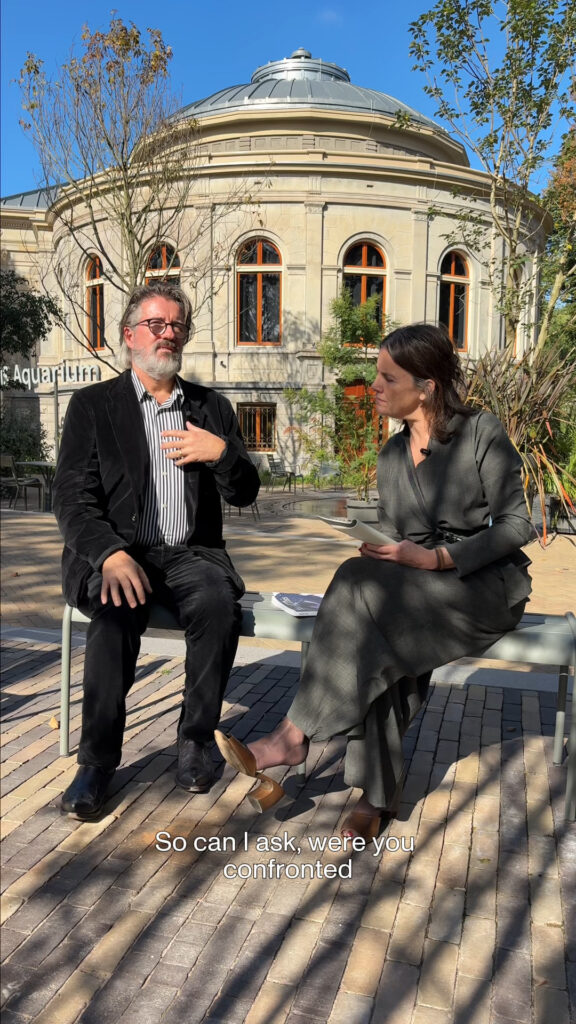
Were you confronted with your own fears while researching this project?
I think I was visiting my own feelings. Fear came up sometimes.
The deep ocean is a significant part of our environment. The ocean is the largest carbon reservoir, and carbon is central to today's climate debate. The ocean plays an enormous role.
We have the AMOC, the Atlantic Meridional Overturning Circulation, with currents moving towards Iceland, my native country, and northern Europe. There's so much happening there.
Sometimes my fear takes the form of despair, or a sense of imprisonment. What can I do? I feel so passive. Why isn't more happening?
I'm deeply concerned about the environment. And when I look at this vast, unknown, dark, cold, almost alien place, I wonder: what is the opposite of this passive imprisonment? Is it freedom? Happiness?
I'd like to challenge that idea. What emotional need isn't being met? What's the opposite of despair?
I think it's connection.
The opposite of despair isn't happiness. It's feeling connected to other people. Being part of a social movement, being part of a community, being acknowledged, seen, met and heard.
Feeling that what I say matters makes me vote. It makes me engage in discussions, read the newspaper, tell stories and listen to other people's stories.
You're a media person, and what we're doing here is sharing stories. Stories are the substance out of which connection comes.
When I think about my own fears, I realise that I have a fear of disconnection. I fear that what I do doesn't matter, that I'll lose my sense of purpose.
With the environmental crisis, that's something I'm very concerned about. Sometimes I stop worrying because I simply don't know what to do anymore. And that brings its own kind of pain.
So yes, I don't know whether this particular project addresses that directly, but it certainly does indirectly. I wanted to embrace that urgency.
Perhaps looking into this darkness is actually a good thing. Looking inward might be the first place to start when addressing the climate crisis.
It's not about telling other people what they should do. It's about asking what you can do yourself. And it starts with our own bodies, with our own gut.
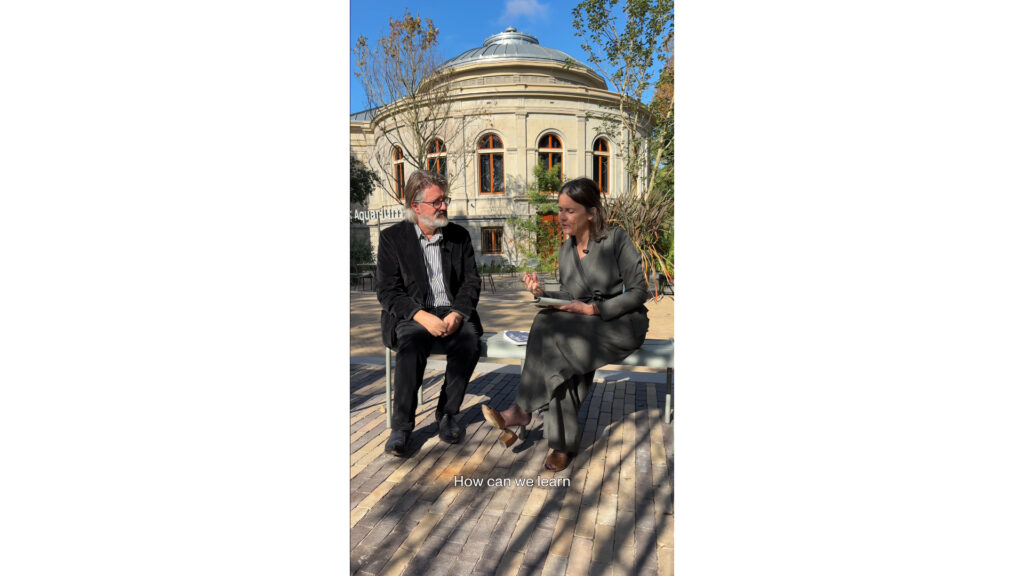
Were you confronted with your own fears while researching this project?
I think I was visiting my own feelings. Fear came up sometimes.
The deep ocean is a significant part of our environment. The ocean is the largest carbon reservoir, and carbon is central to today's climate debate. The ocean plays an enormous role.
We have the AMOC, the Atlantic Meridional Overturning Circulation, with currents moving towards Iceland, my native country, and northern Europe. There's so much happening there.
Sometimes my fear takes the form of despair, or a sense of imprisonment. What can I do? I feel so passive. Why isn't more happening?
I'm deeply concerned about the environment. And when I look at this vast, unknown, dark, cold, almost alien place, I wonder: what is the opposite of this passive imprisonment? Is it freedom? Happiness?
I'd like to challenge that idea. What emotional need isn't being met? What's the opposite of despair?
I think it's connection.
The opposite of despair isn't happiness. It's feeling connected to other people. Being part of a social movement, being part of a community, being acknowledged, seen, met and heard.
Feeling that what I say matters makes me vote. It makes me engage in discussions, read the newspaper, tell stories and listen to other people's stories.
You're a media person, and what we're doing here is sharing stories. Stories are the substance out of which connection comes.
When I think about my own fears, I realise that I have a fear of disconnection. I fear that what I do doesn't matter, that I'll lose my sense of purpose.
With the environmental crisis, that's something I'm very concerned about. Sometimes I stop worrying because I simply don't know what to do anymore. And that brings its own kind of pain.
So yes, I don't know whether this particular project addresses that directly, but it certainly does indirectly. I wanted to embrace that urgency.
Perhaps looking into this darkness is actually a good thing. Looking inward might be the first place to start when addressing the climate crisis.
It's not about telling other people what they should do. It's about asking what you can do yourself. And it starts with our own bodies, with our own gut.
How can we learn to take care of a world we'll probably never see with our own eyes? You mentioned connectedness, but is there an answer to that? How can we learn to care?
I don't think we have to learn. I think we already know how to care. But perhaps we're not motivated enough, or we don't know whether our actions work. We're not convinced that what we do matters.
We're waiting for somebody with more power than us to take care of things: politicians, big companies, international corporations. We're waiting for them to act, and we shouldn't be waiting.
We have a choice. We can influence them. We can vote, we can buy certain products, we can speak up.
But I also believe that each of us, as a single human being, a tiny particle in a much bigger system, has the agency to do something small but significant.
And we know what to do.
Do we?
I think if we don't know, it's only a question of spending a minute or two finding out.
We know that we can make choices about the products we buy, the energy company we use, and how we live. Even doing a little is already more than doing nothing.
We've spent twenty or thirty years educating ourselves about these issues. Now it's about adaptation and implementation.
But on a more personal level, we can also begin by thinking about our own bodies. We need to start somewhere, and it starts with our own body. When we take care of our body, we take care of the world.
We also need to allow ourselves to think uncomfortable thoughts.
As a society, we've borrowed from the future. Our children and grandchildren are going to have to repay that loan, the environmental loan, the planetary loan we've taken out in order to live the way we do today.
We can sit back and hope that someone will come up with a genius invention that resolves everything. And perhaps some inventions will come. But is it really likely that technology will solve everything? I think that would be a very optimistic assumption.
We need to find ways to address these challenges ourselves. And I think it starts with asking difficult questions.
What's the difficult question we need to ask ourselves?
Do I feel alone? Do I feel I have the tools to do something about it? Do I feel hurt? Do I feel that somebody is listening to me?
What emotional needs do I have? Are they being met by society, by my friends? Do I feel ashamed? Or do I dare to confront my own darkness?
But even you, you're not alone. You have a voice, a way to express yourself. You've been doing this for years and years, and yet you still describe that feeling of fear, of not doing enough.
I think we all have that in common.
I'm an artist. I use my skills as an artist to address certain topics. You are, among other things, a journalist, and you use your skills as a journalist to tell stories.
I think everyone has the capacity to do something within the field they've been trained in.
I've been fortunate to collaborate with great people, and I've become a very visible artist. That comes with added responsibility. I need to make sure I use that visibility in a sane and reasonable way.
But as a private person, I still live by the same fundamental principles as everyone else. I have to make choices about how I conduct my relationships, how I choose to live.
And sometimes I lose my train of thought. I make mistakes. I admit that. I try to balance what I think is right and wrong, and to do the right thing. Sometimes I even manage to do the right thing without making a mistake.
Thank you.
I think we're all working on it.
The really challenging thing is when people feel alienated and disconnected. That's when they may begin to act irrationally. They become more susceptible to radicalisation, to distorted ideas about power, the economy and capital.
Once we experience a sense of connectedness between our stories, our life stories, I believe we're more likely to act on behalf of one another rather than at each other's expense.
I think it's also important to recognise that we humans need access to science. My artwork may be closer to the social sciences than the natural sciences, but it's a bridge between the two.
When I came here and saw all the fish tanks, I realised something. What I would recommend to anyone visiting the aquarium is to go behind the scenes. You can actually see the machines that maintain the aquariums.
All of that engineering is needed to reproduce what nature does by itself. The sheer amount of work that goes into copying nature shows just how brilliant nature is.
Recent stories
-
![]()
Olafur Eliasson: Look Closer no. 3
-
![Tatiana Trouvé | foto: Hélène Pambrun & Thomas Merle, met dank aan de kunstenaar]()
Tatiana Trouvé at Xavier Hufkens: Look Closer no. 2
-
![]()
Kent Guide: From Margate to Manor
-
![Alberto Giacometti, Hour of the Traces, 1932, gips, hout en staal, 69 x 36 x 29 cm]()
That One Moment: Chronos and Kairos
-
![Bar Magritte Hotel, Amigo, Brussels]()
Brussels Bound: City guide
-
![]()
A harmonic universum: A one-of-a-kind pocket watch
-
![]()
William Kentridge: Look Closer no. 1
-
![Marisol Foto: Nancy Astor]()
Between Glamour and Rebellion: Marisol at Depot Boijmans
-
![Helen Frankenthaler met April Mood in haar studio op East 83rd Street in New York, 1974 | © 2026 Helen Frankenthaler Foundation, Inc./ProLitteris, Zurich | foto: Alexander Liberman © J. Paul Getty Trust]()
Helen Frankenthaler & Donald Judd at Kunsthal KAdE: Radical and rigorous
-
![Zeeplokaal]()
Li’s Forecast #11: In praise of soap
-
![Piet Oudolf garden at Noma, Copenhagen]()
Piet Oudolf’s 16 favourite plants: Create your own Oudolf garden
-
![William Kentridge, Waiting for the Sibyl]()
BREAKING #338: She has all the answers
-
![Nicole Ex (rechts) en Sarah Knigge (links) ergens tussen spiegelbeeld, stippen en oneindigheid in Yayoi Kusama’s nieuwe Infinity Mirror Room in het Stedelijk Museum Amsterdam, 9 september 2026]()
BREAKING #337: Yayoi Kusama
-
![]()
BREAKING #336: Body language
-
![Getty Research Institute, Los Angeles, schenking van de Roy Lichtenstein Foundation ter nagedachtenis aan Harry Shunk en Janos Kender | Foto: Shunk-Kender © J. Paul Getty Trust]()
Endlessly innovative: Yayoi Kusama in Amsterdam
-
![Marisol Escobar met haar sculptuur The Kennedyʼs, 1964 | © foto: Sam Falk]()
In the Kitchen with Marisol Escobar: ‘I decided never to talk again’
-
![Justine Kurland, {{Orchard}}, 1998, chromogenic print, 76.2 × 101.6 cm]()
BREAKING #334: The Orchard Project, Part II
-
![Wolfgang Tillmans, Inner City Apple Tree, 2004]()
BREAKING #333: An orchard for the future
-
![]()
Which room did you fall in love with?: Send us your all-time favourite cinematic room
-
![]()
BREAKING #332: In love with a room