BREAKING #347
Ketchup as dinner
The doorbell rang and I looked up, startled. A Pulitzer Prize-winning biography had been delivered to me, as heavy as a brick: De Kooning. An American Master (2006, 2026). Published in Dutch by Meulenhoff and written by the Americans Mark Stevens and Annalyn Swan. It came out of the blue, but apparently sometimes you just have to be put on the spot.
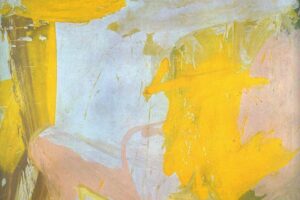
I remember the first time I saw a De Kooning. It was the first time I’d walked through the Stedelijk Museum on my own. The parquet floor creaked beneath my feet as I stepped into that white gallery where a few of his paintings hung, and I fell in love with them instantly. Especially that Rosy-Fingered Dawn at Louise Point (1963) – a reference to Homer.
I’ve been lugging that book about me for weeks now: packing it in my suitcase, and carrying it from the sofa to the bed. Why didn’t they publish it in two volumes, I wondered? But slowly I get drawn in and a picture emerges of the man behind ‘De Kooning’. An artist who painted out of necessity and ate ketchup for dinner so that he could buy enough paint: ‘His life revolved around art, and that was that.’
In 1926, the Dutch artist De Kooning swapped Rotterdam for ‘provincial’ New York, whilst most European artists were heading to Paris, where his source of inspiration, Pablo Picasso, lived and worked. Picasso’s Guernica (1937), in particular, would bring about a definitive shift in De Kooning’s figurative work, in which body parts began to disintegrate and merge into an abstract whole.
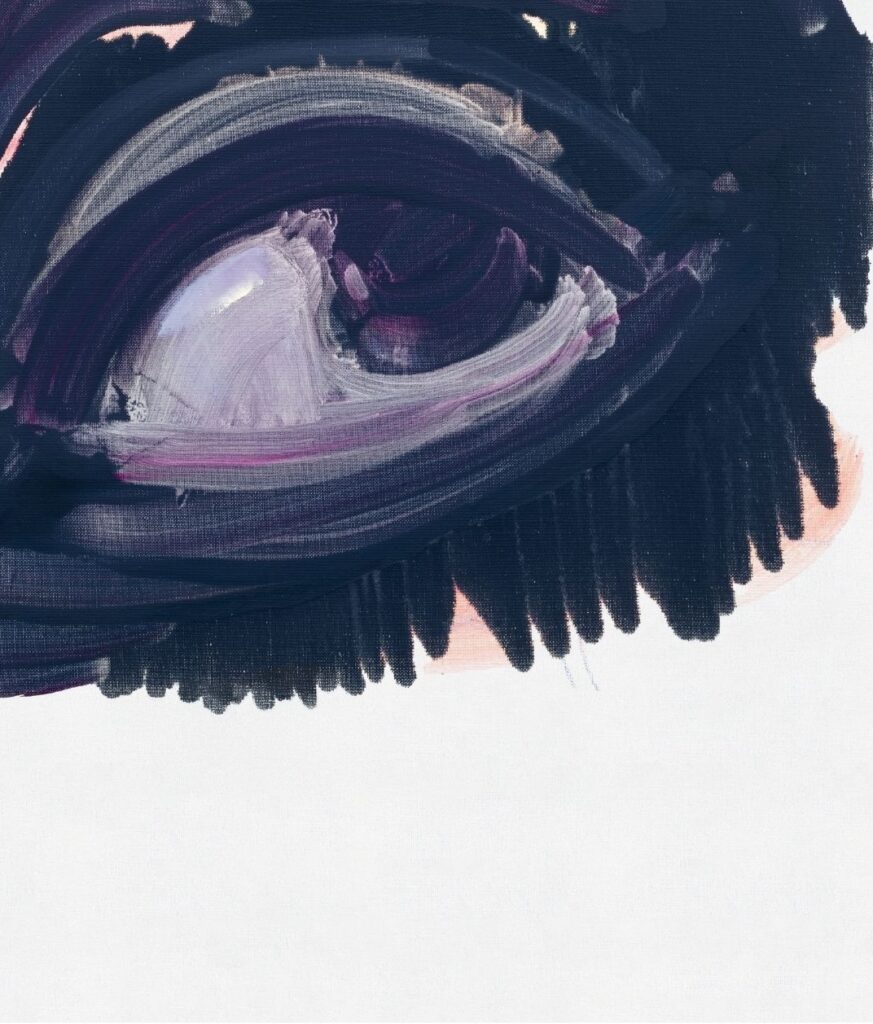
De Kooning destroyed much of his work, and his doubts about the correct line would be captured in layers of paint: ‘For De Kooning, a twist in his thoughts was immediately a twist in the paint,’ write his biographers. ‘Every painting seems on the verge of becoming a different painting, and De Kooning therefore actually created his works through a process of literal metamorphosis.’
Last Friday, I unexpectedly saw De Kooning’s work hanging in the Rijksmuseum’s Gallery of Honour, opposite Rembrandt – two workaholics. But amidst the seventeenth-century establishment, De Kooning’s paint still seemed wet. I had always perceived his doubt as a pink vibrancy, never as uncertainty or fear. But perhaps that is why his work feels so contemporary and urgent.
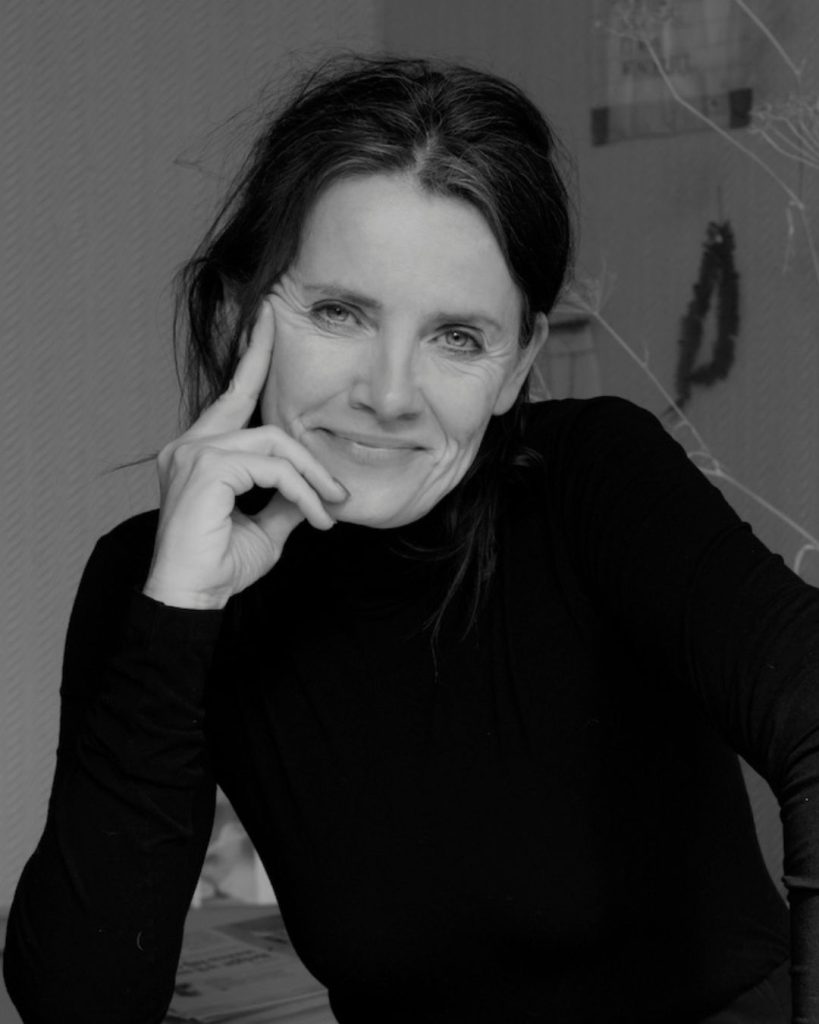
— Nicole Ex
founding editor
Willem de Kooning at work is on display until 17 January 2027 at the Rijksmuseum in Amsterdam.
Recent stories
-
![]()
BREAKING #347: Ketchup as dinner
-
![]()
Stéphane Aisinber (Saint-Martin Bookshop): Look Closer no. 5
-
![Ibrahim Mahama, Fondation Cartier]()
BREAKING #346: Here, you'll be brought to your knees
-
![]()
Vivian Suter: Look Closer no. 4
-
![]()
BREAKING #343: It replied that it gave it 'goosebumps'
-
![]()
Olafur Eliasson: Look Closer no. 3
-
![Tatiana Trouvé | foto: Hélène Pambrun & Thomas Merle, met dank aan de kunstenaar]()
Tatiana Trouvé at Xavier Hufkens: Look Closer no. 2
-
![]()
BREAKING #341: It is love
-
![]()
Kent Guide: From Margate to Manor
-
![Alberto Giacometti, Hour of the Traces, 1932, gips, hout en staal, 69 x 36 x 29 cm]()
That One Moment: Chronos and Kairos
-
![]()
Does the Universe Keep Time?: From atomic clocks to the cosmic film reel
-
![Bar Magritte Hotel, Amigo, Brussels]()
Brussels Bound: City guide
-
![]()
A harmonic universum: A one-of-a-kind pocket watch
-
![]()
William Kentridge: Look Closer no. 1
-
![Marisol Foto: Nancy Astor]()
Between Glamour and Rebellion: Marisol at Depot Boijmans
-
![Helen Frankenthaler met April Mood in haar studio op East 83rd Street in New York, 1974 | © 2026 Helen Frankenthaler Foundation, Inc./ProLitteris, Zurich | foto: Alexander Liberman © J. Paul Getty Trust]()
Helen Frankenthaler & Donald Judd at Kunsthal KAdE: Radical and rigorous
-
![Zeeplokaal]()
Li’s Forecast #11: In praise of soap
-
![Piet Oudolf garden at Noma, Copenhagen]()
Piet Oudolf’s 16 favourite plants: Create your own Oudolf garden
-
![William Kentridge, Waiting for the Sibyl]()
BREAKING #338: She has all the answers
-
![Nicole Ex (rechts) en Sarah Knigge (links) ergens tussen spiegelbeeld, stippen en oneindigheid in Yayoi Kusama’s nieuwe Infinity Mirror Room in het Stedelijk Museum Amsterdam, 9 september 2026]()
BREAKING #337: Yayoi Kusama