‘I Begin with the Body as It Is’
In conversation with Rosa Esteva
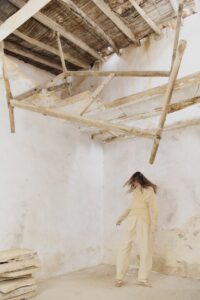
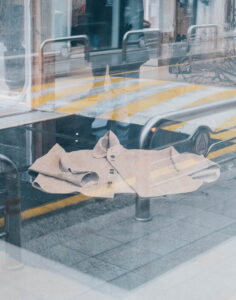
There is something almost sculptural in the way Spanish designer Rosa Esteva approaches form. Fabrics fall and fold like drapery in classical sculpture, tracing the body without constraining it. Esteva founded Cortana in 2001. Since then, the label has been shaped by a philosophy of craftsmanship, natural materials and slowness, with collections produced in small ateliers in Spain.
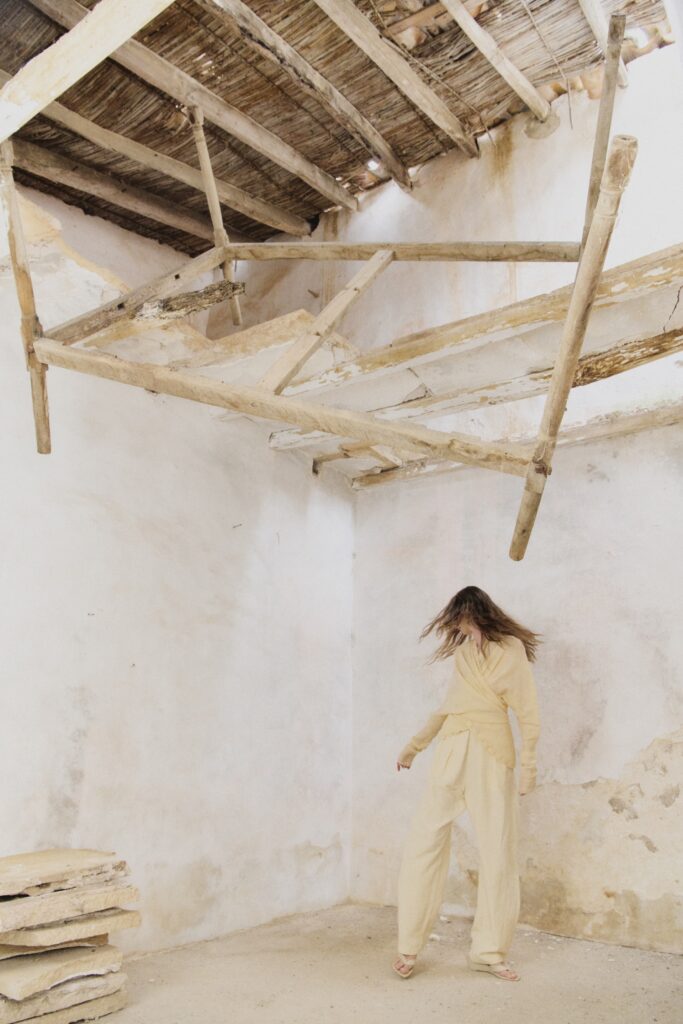
‘Mallorca has shaped me,’ Rosa Esteva says. ‘It gives me a rhythm I can trust.’ You can feel that rhythm in the clothes: in the way silk loosens around the body, in linen that catches light softly, in silhouettes that seem less designed than arrived at. Since founding her label Cortana in the early 2000s, Esteva has built a practice shaped by natural fibres, craft, slowness, and garments that begin with the body.
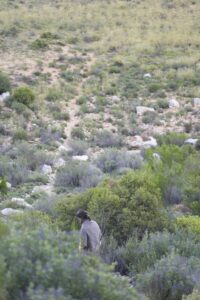
Mallorca is more than the place from which she works. It is part of the condition that allows her way of working to exist. The island returns in the language she uses to describe her practice: calm, intimacy, clarity, return. ‘Sometimes I think of myself as a plant,’ she says, ‘shaped by its surroundings and carrying the memory of those who were here before.’ It is an image that says much about her work as well. Cortana seems to grow from climate and atmosphere: from light, air, mineral textures, the sea, and from a way of looking that favours attention over spectacle.
Founded after Esteva’s earlier work in styling and costume design, Cortana emerged as both her dream and her central professional project: a space from which her work could unfold according to her own understanding of design. Her training gave her structure and technical tools, she says, but the deeper foundations came from elsewhere – from family, environment and everything that shaped her eye before fashion named it.
That philosophy begins with the body as lived reality: changing, breathing, carrying memory, fatigue, pleasure and time. ‘I begin with the body as it is,’ Esteva says. ‘There is already so much intelligence there.’
That intelligence is physical, intuitive and tactile. In the workshop, garments are developed on the body itself. Fabric is tried, shifted, pinned, worn, lived in for a while. A sleeve is adjusted because the body tells you something the sketch could not. ‘We don’t do this on mannequins,’ Esteva says. ‘One thing that helps us at this stage of the process is feeling the fabric against our skin, imagining the garment’s potential by making changes, seeing how it fits one person or another, wearing it for a while to refine that most inspiring version.’ Designing, for her, means experiencing the garment as much as making it. ‘I need to experience the things I design and, through that physical experience, find the form I am looking for.’
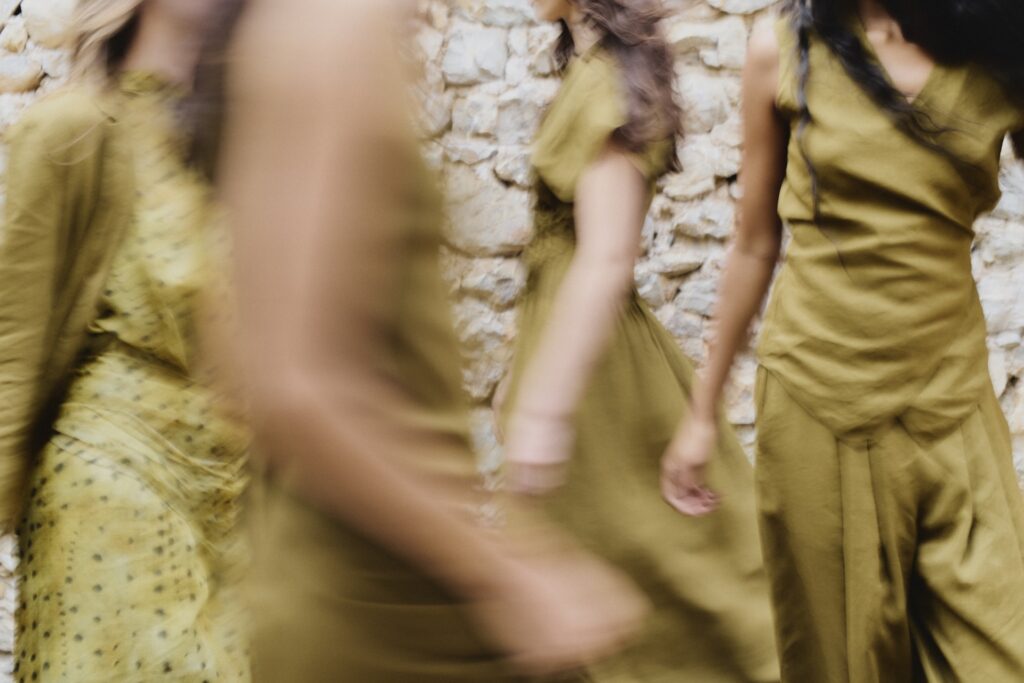
There is something sculptural in that process, though not in any monumental sense. It lies in the attention to volume, weight, contour and drape: to the relationship between form and the space around it. Esteva’s garments stay close to the body, trace it and move with it.
‘Movement defines all of Cortana’s work,’ she says. ‘It is not only aesthetic – it reflects a condition of change. Nothing in nature is static.’ For Esteva, the body is understood as something always in process, altered by time, mood, weather, age and experience. And so, a garment has to be capable of entering that process. ‘I am not interested in pieces that restrict the body,’ Esteva says. ‘I want them to accompany different moments, to allow ease, and to feel natural when worn.’
Material plays an equally important role. Cortana’s fabrics – silk, linen, wool and other natural fibres – are chosen for what they do in relation to the body and the hand. ‘We work with natural fabrics because they allow a direct connection,’ Esteva says. ‘They respond to the body and to the hand. There is a physical experience in wearing them.’ Each garment begins, she explains, with the question of structure: what kind of weight, drape or texture a particular form asks for. Material is what allows shape, gesture and atmosphere to happen.
Most of Cortana’s collections are made in Spain, in collaboration with local ateliers and artisans. Many of those relationships have developed slowly over years, through continuity rather than scale. Esteva speaks of them as part of the original intention: to support craftsmanship and sustain forms of knowledge that fashion too easily treats as decorative rather than foundational. Sustainability, in that sense, grows out of attention – to process, to proximity, to what a piece can become when it is not made in haste. ‘I want everything to return to the earth,’ she says. ‘To exist within a cycle, rather than outside of it.’
Here again, Mallorca returns as more than backdrop. ‘The island allows me to be and to create from a place of calm,’ she says. ‘It is like returning home after a long journey – a space of intimacy where I reconnect with myself. From that state, ideas take form.’
Cortana is available in its boutiques in Madrid, Barcelona and Palma de Mallorca and online at cortana.es.
This is an article from See All This #42, summer 2026. Order the edition here.
Recent stories
-
![]()
The President’s Body: How power takes shape
-
![]()
More than meets the eye: A super short history of eyeliner
-
![]()
‘I Begin with the Body as It Is’: In conversation with Rosa Esteva
-
![]()
William Forsythe: ‘The Body never lied to me’
-
![]()
-
![]()
BREAKING #323: What matters here is focus
-
![]()
Guide: Venice Biennale 2026: Curator and artist Jacquill G. Basdew shares his five tips for the 2026 Venice Biennale.
-
![]()
BREAKING #322: Mark Rothko in Florence
-
![]()
Seoul, Still: An art lover’s guide to South Korea’s capital
-
![]()
BREAKING #320: The wildest animals
-
![]()
BREAKING #319 | TRAVEL DIARY: The layering of impressions
-
![]()
Travel journal: South Africa and Italy
-
![]()
Treasure Hunt #3: Pen Strokes
-
![]()
BREAKING #318 | TRAVEL DIARY: ‘An almost impenetrable fortress’
-
![]()
Karel Martens: 5x graphic design for the home
-
![]()
BREAKING #317 | TRAVEL DIARY: Why does the ‘seabed’ look azure?
-
![]()
Treasure Hunt #2: A true transformer
-
![]()
BREAKING #316 | TRAVEL DIARY: ‘Which one is the real world?’
-
![]()
BREAKING #315 | TRAVEL DIARY: ‘Are we nearly there?’
-
![]()
Li’s Forecast #9: This is the plank you don’t want to miss