Guide: Venice Biennale 2026
Curator and artist Jacquill G. Basdew shares his five tips for the 2026 Venice Biennale.
Kaloki Nyamai
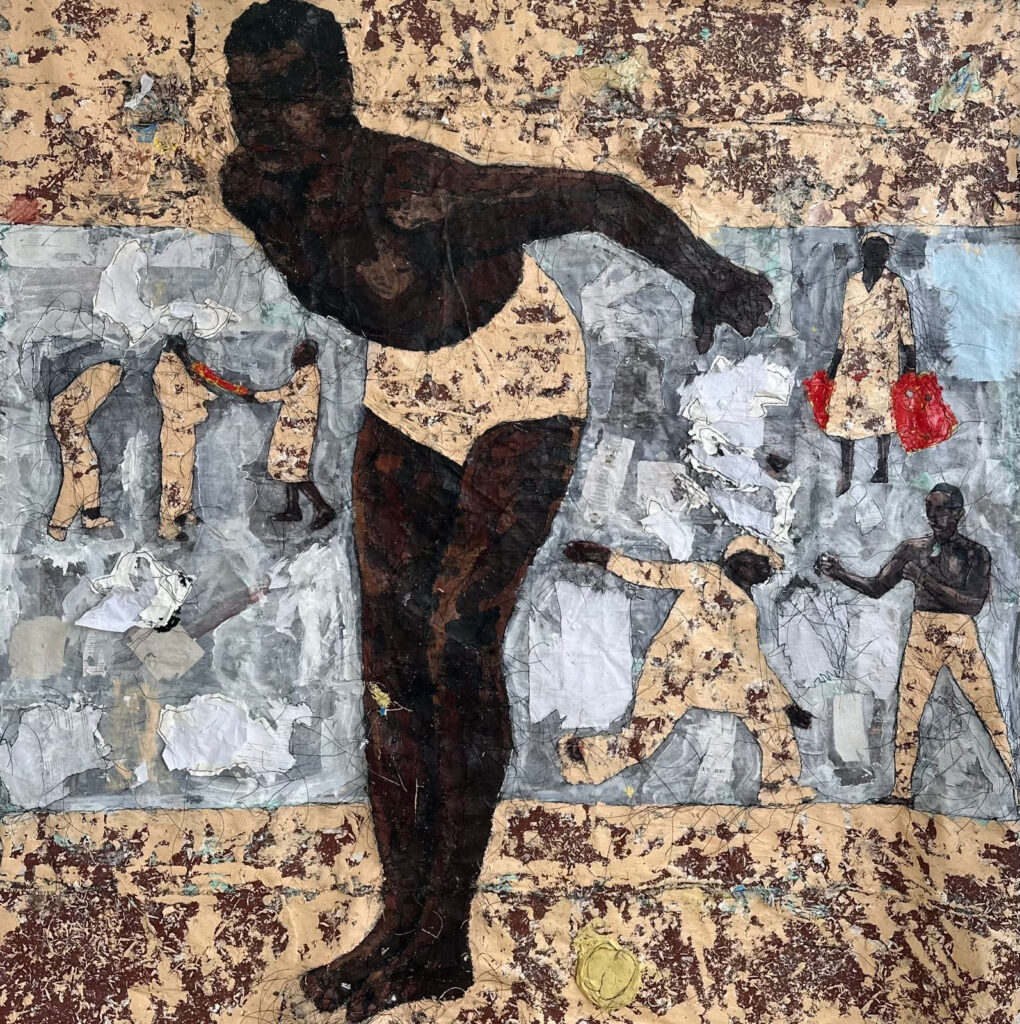
Earlier this year, I had already spoken about Kaloki Nyamai’s work and his participation in the Venice Biennale, but seeing it there still completely blew me away. His monumental textile works bring together memory, ancestral knowledge and collective identity in a visual language that feels both personal and political. It is also striking how strongly the Kenyan presence can be felt throughout this year’s Biennale – and above all, how compelling the work itself is.
Wangechi Mutu
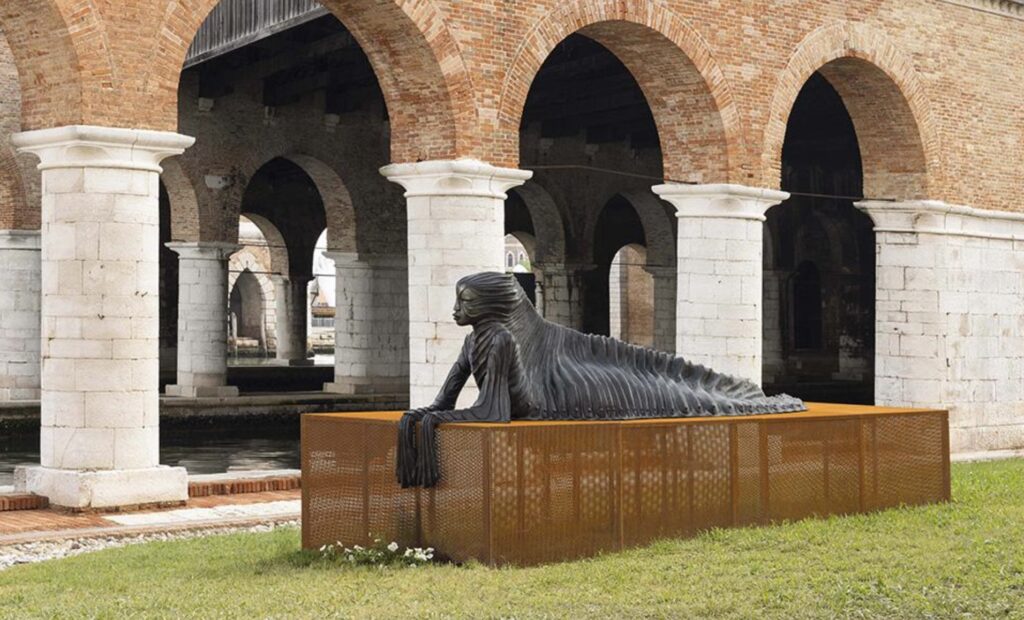
Wangechi Mutu
Wangechi Mutu once again shows how powerful that Kenyan presence is within this Biennale. Her work moves between mythology, ecology, spirituality and diaspora, and does so with a rare sense of ease. The new sculptural installations feel almost timeless, as if they emerged from both a distant past and a future still waiting to take shape. At the Biennale, she presents In The End, Where All began, EdEN.
Lorna Simpson | Third Person
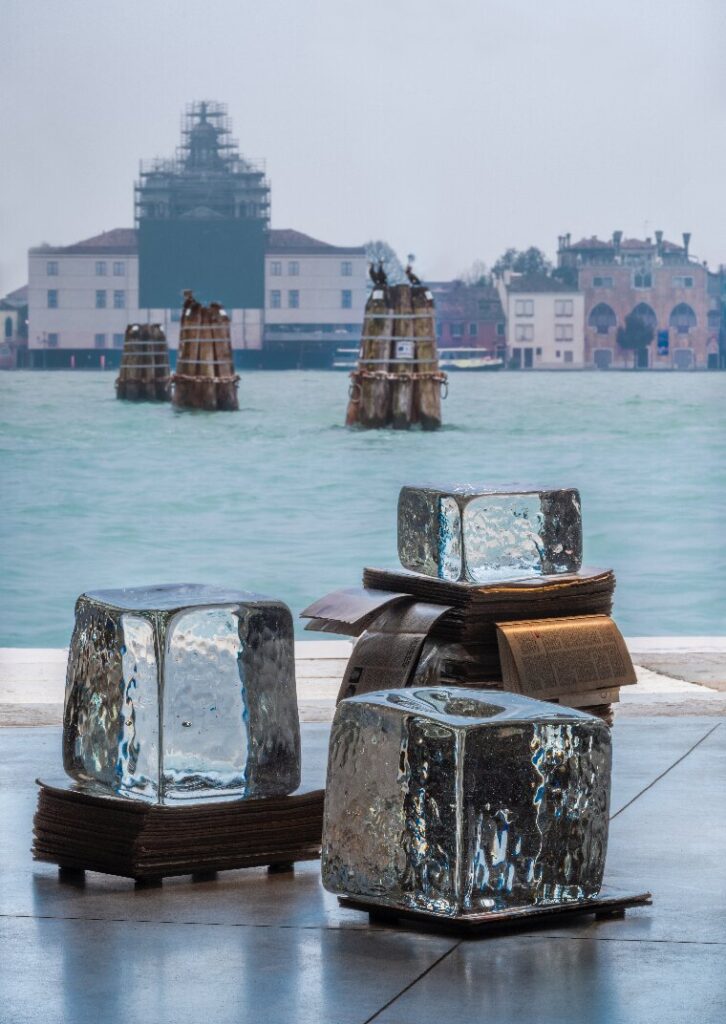
Lorna Simpson comes fully into her own at Punta della Dogana. Third Person, on view at this Venetian venue of the Pinault Collection, is for me one of the strongest presentations outside the Giardini and the Arsenale. Simpson moves convincingly between photography, painting, collage, sculpture and film, while themes of memory, race, the archive and disappearance continually fold into one another.
The Only True Protest Is Beauty
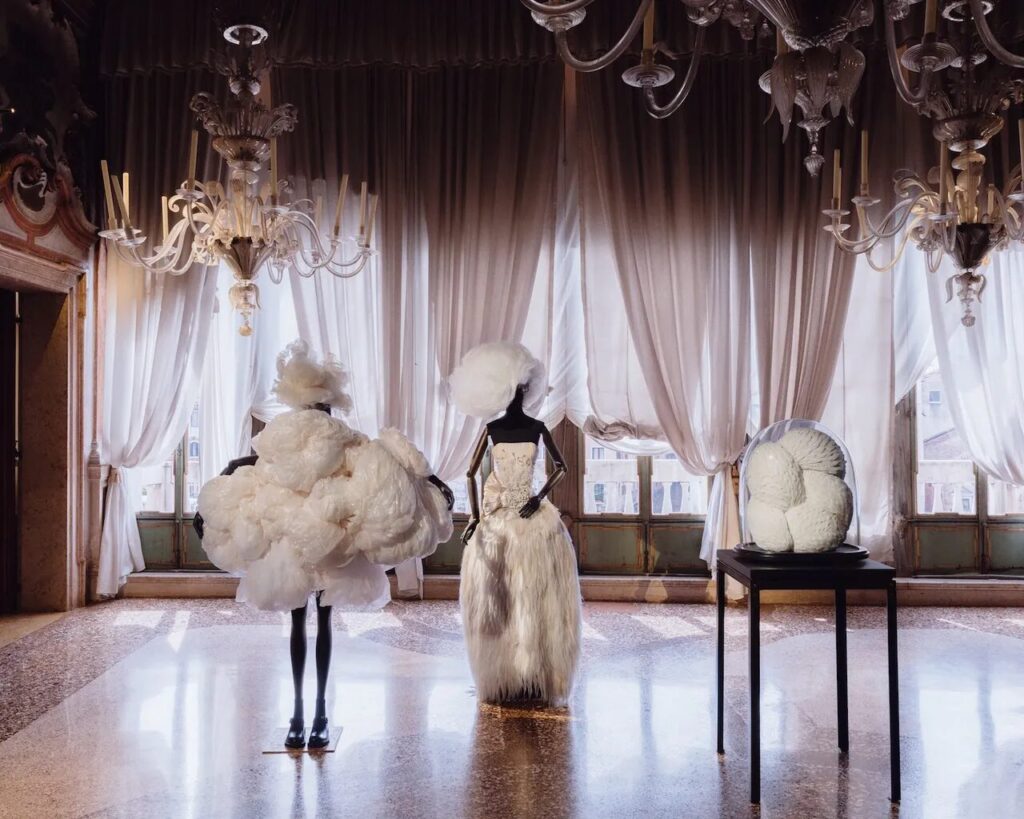
The Only True Protest Is Beauty
A sharp and intentionally curated presentation within the new Fondazione Dries Van Noten, on view at Palazzo Pisani Moretta. The Only True Protest Is Beauty approaches beauty not as escapism, but as a charged force capable of unsettling the familiar and making space for the unexpected. The dialogue between art, craftsmanship and the richly historical Venetian palazzo makes the presentation all the more compelling.
Ruin
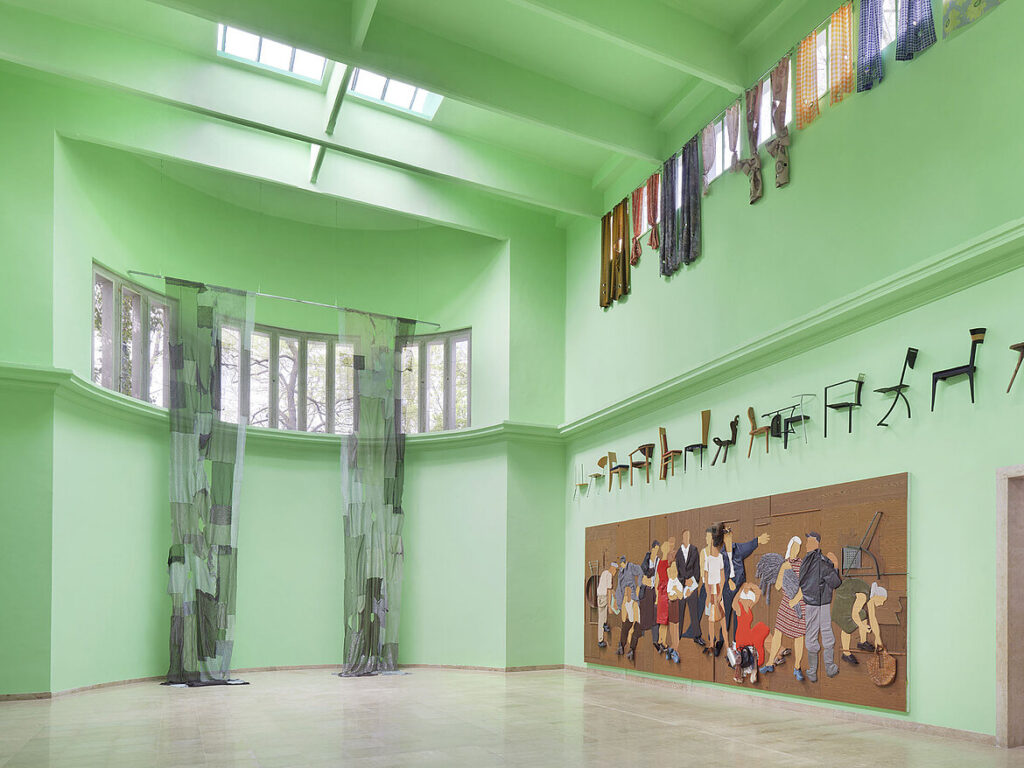
One of the most urgent contributions to this Biennale. At the German Pavilion, Ruin brings together Sung Tieu and Henrike Naumann in a layered reflection on architecture, migration, exclusion and memory. In Tieu’s work especially, the tension between personal history and larger structures of power becomes palpable – as does the question of who is allowed visibility within national and institutional narratives, and who is not.
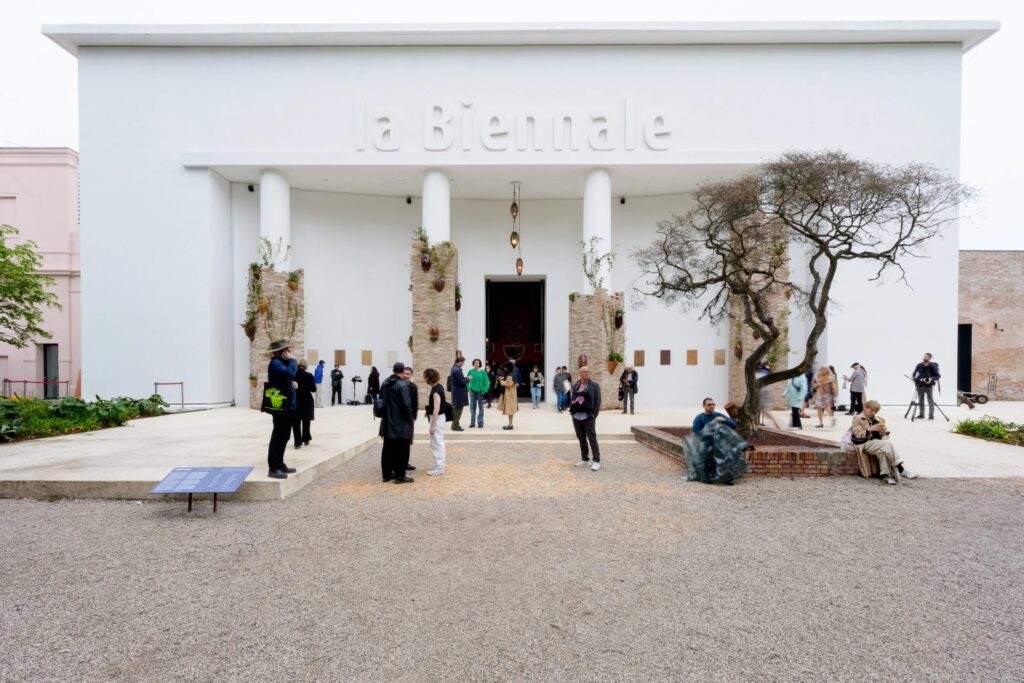
The Venice Biennale takes place until 22 November 2026, labiennale.org.
Recent stories
-
![]()
Olafur Eliasson: Look Closer no. 3
-
![Tatiana Trouvé | foto: Hélène Pambrun & Thomas Merle, met dank aan de kunstenaar]()
Tatiana Trouvé at Xavier Hufkens: Look Closer no. 2
-
![]()
Kent Guide: From Margate to Manor
-
![Alberto Giacometti, Hour of the Traces, 1932, gips, hout en staal, 69 x 36 x 29 cm]()
That One Moment: Chronos and Kairos
-
![Bar Magritte Hotel, Amigo, Brussels]()
Brussels Bound: City guide
-
![]()
A harmonic universum: A one-of-a-kind pocket watch
-
![]()
William Kentridge: Look Closer no. 1
-
![Marisol Foto: Nancy Astor]()
Between Glamour and Rebellion: Marisol at Depot Boijmans
-
![Helen Frankenthaler met April Mood in haar studio op East 83rd Street in New York, 1974 | © 2026 Helen Frankenthaler Foundation, Inc./ProLitteris, Zurich | foto: Alexander Liberman © J. Paul Getty Trust]()
Helen Frankenthaler & Donald Judd at Kunsthal KAdE: Radical and rigorous
-
![Zeeplokaal]()
Li’s Forecast #11: In praise of soap
-
![Piet Oudolf garden at Noma, Copenhagen]()
Piet Oudolf’s 16 favourite plants: Create your own Oudolf garden
-
![William Kentridge, Waiting for the Sibyl]()
BREAKING #338: She has all the answers
-
![Nicole Ex (rechts) en Sarah Knigge (links) ergens tussen spiegelbeeld, stippen en oneindigheid in Yayoi Kusama’s nieuwe Infinity Mirror Room in het Stedelijk Museum Amsterdam, 9 september 2026]()
BREAKING #337: Yayoi Kusama
-
![]()
BREAKING #336: Body language
-
![Getty Research Institute, Los Angeles, schenking van de Roy Lichtenstein Foundation ter nagedachtenis aan Harry Shunk en Janos Kender | Foto: Shunk-Kender © J. Paul Getty Trust]()
Endlessly innovative: Yayoi Kusama in Amsterdam
-
![Marisol Escobar met haar sculptuur The Kennedyʼs, 1964 | © foto: Sam Falk]()
In the Kitchen with Marisol Escobar: ‘I decided never to talk again’
-
![Justine Kurland, {{Orchard}}, 1998, chromogenic print, 76.2 × 101.6 cm]()
BREAKING #334: The Orchard Project, Part II
-
![Wolfgang Tillmans, Inner City Apple Tree, 2004]()
BREAKING #333: An orchard for the future
-
![]()
Which room did you fall in love with?: Send us your all-time favourite cinematic room
-
![]()
BREAKING #332: In love with a room