More than meets the eye
A super short history of eyeliner
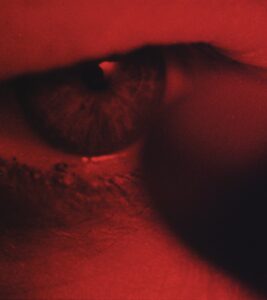
Beauty can adorn, conceal, protect, transform. Few cosmetic practices hold all these meanings as vividly as kohl, or eyeliner.
Across every culture, on every continent, humans search for beauty. We long for it like truth, crave it like desire. We need beauty like we need water. And we waste and overlook them both just the same. Earth’s great body and all her living creatures teach us that nature is never just pretty. The vivid colours and patterns of the Monarch butterfly warn and protect against predators. Evolved to resemble a bee, the velvety, creature-like orchid needs their beauty for pollination. And there’s a biological urgency behind his display, when the bird of paradise dances for his prospective mate.
The beginnings of makeup and cosmetics took notes from nature. Makeup as a tradition is inseparable from spirituality and protection. It began with ochre in prehistoric Africa, where early homo sapiens believed that when the vivid colour (evocative of blood and life energy) was applied to the skin, it could assist in life, death, resurrection and rebirth. When applied to the hands and feet, henna worked as a coolant for the body, but it also symbolised wisdom, strength and cultural pride. Vermillion tinted cheeks and lips, but the orange-red pigment also symbolised deep spiritual concepts like the soul of the earth, good fortune and eternity. Yet, few cosmetics hold all these meanings as vividly as eyeliner: the dark line drawn around the eye, used across centuries as a tool for healing, divinity, protection and beauty.
Well before eyeliner became a ubiquitous cosmetic in the West, it was already deeply rooted in North and East African, Middle Eastern and South Asian cultures. Its story begins with the men and women of the Nile, who lined their eyes with mesdemet, the earliest known form of eyeliner, dating back to 3100 BCE. In ancient Egypt, beautification could be understood as a path towards the divine. The prettier you made yourself, the more likely it was that a god (like Horus – who wore heavy eyeliner and was a symbol of prosperity and protection) would notice you.
Men and women in ancient Egypt wore mesdemet not only to enhance their features, but also for its practical and medicinal properties. It helped shield the eyes from harsh desert conditions and was believed to protect against disease and curses. It was also a marker of class: wealthier Egyptians used higher-quality galena from the Red Sea, while others turned to soot made from almond shells, sunflowers or frankincense. Over time, mesdemet became known more broadly as kohl – from the Arabic al-kuḥl – a dark cosmetic made from naturally sourced materials. Across the Arabian Peninsula, kohl remained both spiritual and medicinal – used to cool inflamed eyes, shield them from sun and dust, and protect the body as much as adorn it.
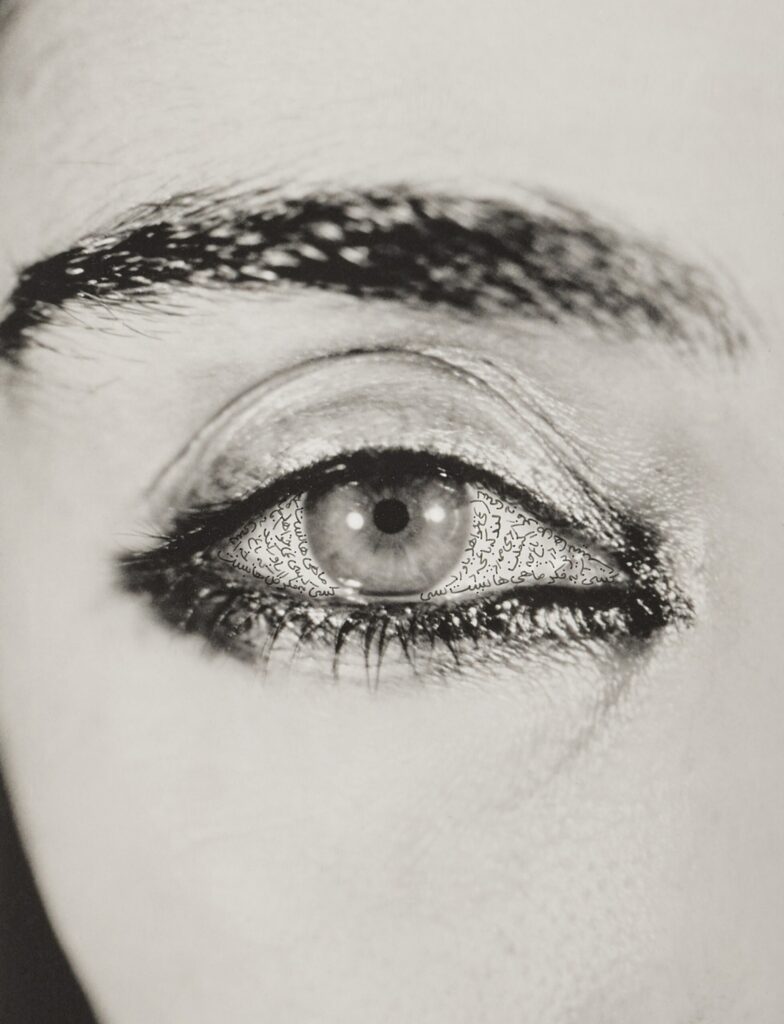
In Arabic cultures, kohl was never simply a product but also a craft and a social practice, made at home or in gatherings and passed down, often by women, to daughters and granddaughters. Through trade and cultural exchange during the Mughal period, kohl also entered South Asia, where it became known as kajal – a soft black cosmetic with cosmetic, medicinal and spiritual uses, deeply woven into Indian and Southeast Asian histories.. Across South Asian cultures, the eyes are understood as a portal between the inner self and the outer world. One could guard against the evil eye – the belief that someone can unintentionally bring harm or misfortune to another person – by sealing the eyes, the portal, with kajal. Parents of newborn babies would, and still do, protect their spiritual and physical well-being by smearing a touch of kajal onto their foreheads as armour against external forces. In the Subhashitavali, a fifteenth-century collection of erotic poetry, kajal also appears as part of feminine adornment before meeting a lover, showing how beauty, protection and desire could gather in the same dark line.
When eyeliner entered the West around 1912, after the discovery of Nefertiti’s bust, much of that deeper context fell away. The kohl-lined eye became a fashion image: exoticised, stylised and quickly commercialised. Soon, brands such as Maybelline sold eyeliner as a mysterious marker of glamour, power and allure. The look remained, but many of the spiritual, medicinal and protective meanings the dark line had carried elsewhere were left behind.
While the mainstream West turned eyeliner into commodity, queer communities – especially drag culture – held on to some of its older force, using makeup as armour, transformation and self-invention. These histories have largely been excluded from dominant narratives, shaped as they are by anti-Black racism and discrimination against LGBTQIA+ communities. In the 1960s, however, sexual freedom, Black power and underground queer culture made makeup central to identity, performance and becoming. Drag is the art of theatrical exaggeration and, like eyeliner itself, it deliberately crosses boundaries, enlarging and troubling fixed ideas of truth and gender.
In 2025, UNESCO recognised kohl as Intangible Cultural Heritage – affirming what communities across North Africa and the Middle East have long known. As Zahra Hankir writes, there is more to eyeliner than meets the eye. Kohl remains inseparable from ritual, medicine, spirituality and self-expression: a living tradition carried across borders, cultures and generations, and a reminder that beauty has never been merely skin-deep.
This text is indebted to Lebanese-British journalist Zahra Hankir and her book Eyeliner: A Cultural History, which served as a key source throughout.
This is an article from See All This #42, summer 2026. Order the edition here.
Recent stories
-
![Wolfgang Tillmans, Inner City Apple Tree, 2004]()
BREAKING #333: An orchard for the future
-
![]()
Which room did you fall in love with?: Send us your all-time favourite cinematic room
-
![]()
BREAKING #332: In love with a room
-
![De studio van Carlo Maria Morsiani, Modena, juli 2026 | foto: Nicole Ex]()
BREAKING #331: The shape of clouds
-
![Shopwork magazine issue 01]()
Treasure Hunt #5: Make your own designer clothes
-
![]()
The Body of Water: Endlessly circulating
-
![]()
1,2,3 under the apple tree: Make your own herman de vries
-
![]()
Li’s Forecast #10: The creative custodian
-
![]()
Cape Town & The Karoo: Travel Diary
-
![]()
Any Body there?: An exhibition-on-paper curated by Marlene Dumas
-
![Vincent van Gogh, IJsvogel aan de waterkant, 1886]()
Treasure Hunt #4: An app for bird lovers
-
![]()
-
![]()
-
![Poster van de cover van See All This #42 | foto: Katerina Bezedei]()
BREAKING #325: See All This is censored
-
![Launch of See All This #42, Café Fonda, Stedelijk Museum, Amsterdam | Photo Katerina Bezedei, clothing Nicole: Cortana]()
See All This #42 – The Body: Launch speech by Nicole Ex
-
![]()
-
![]()
Labourland: Stories from the Womb
-
![]()
A Red-Hot Handbook: A hands-on guide to pleasure
-
![]()
Any Body There?: An essay by Marlene Dumas
-
![]()
Editorial #42: They blush, dissolve, desire