Why Gardening Is Good For You
Sue Stuart-Smith on the healing power of gardening
In her ground-breaking book The Well-Gardened Mind, psychiatrist Sue Stuart-Smith explains the therapeutic impact of gardening: while we are looking after plants, they are actually taking care of us. 10 ways to unwind with nature.
1. Snow
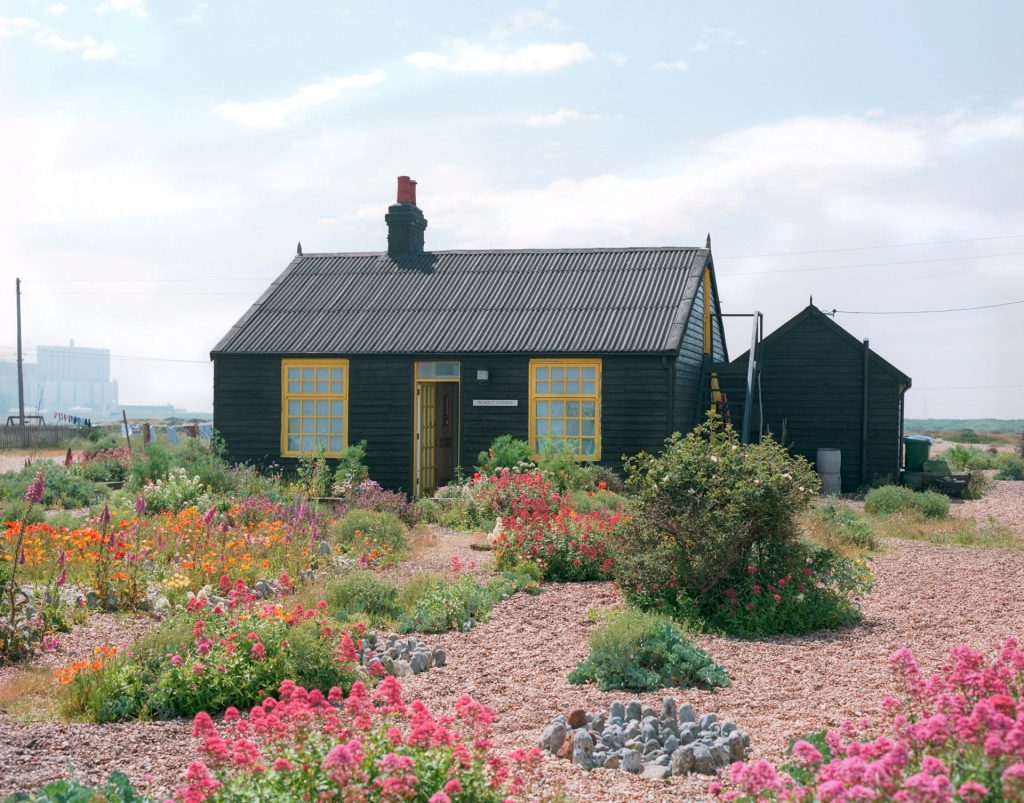
Propagating plants from seed is what hooked me into gardening. Even after many years, the magic of new life emerging never fails to thrill me. Starting a part of your garden with seeds allows you to have a hand in the very beginnings of life. Seeds have tomorrow ready-built into them and this forward-looking aspect of gardening is particularly helpful at times when life feels very uncertain. A packet of seeds is a small investment but when you sow them, you know that you are making something good happen. It’s hard to think of anything else that is so simple that can give rise to such positive anticipation and yield such a powerful result. If you’re not very confident or are new to gardening, start with seeds that are dependable – nasturtiums and sunflowers are both wonderfully colourful and easy to grow.
2. Slow
The unremitting pace of urban life and modern technology has led to a devaluing of the slower rhythms of natural time. But in the garden, the pace of life is the pace of plants, and gardening itself can have a meditative aspect to it if you allow yourself to be present. The rhythmic activities of weeding, hoeing and sowing,lend themselves to being practised mindfully. For me, gardening calms and decompresses my mind and I often find that the jangle of competing thoughts inside my head clears as the weed bucket fills up.
3. Bond
The earthy physicality of gardening can be a great antidote to looking at a screen. The great psychoanalyst Carl Jung recognised the value of gardening because he believed that modern lifestyles had alienated people from the ‘dark maternal, earthy ground of our being’. There exists an ancient physical connection to the soil because in the course of our evolution as a species, we cevolved with the myriad ‘friendly’ bacteria that inhabit the soil. These organisms play a crucial role in stimulating healthy activity in our immune systems and research indicates that one in particular, Mycobacterium vaccae, may also help raise levels of the mood boosting neurotransmitter serotonin i the brain.
4. Play
Regardless of age, gardening can be a form of play. The garden is an ‘in-be-tween’ space – a meeting place between our innermost, dream-infused selves and the real physical world where we can lose ourselves in the activity of making things happen. One of the largest studies of ageing, carried out by Harvard, found that people who developed creative outlets in their fifties were three times more likely to be thriving at eighty than people who had not. There are many reasons why this should be so. One is that being able to shape part of our world is empowering and another may be linked to release of brain-derived neurotrophic factor (BDNF) in the brain. Entering into states of creative play is associated with increased levels of BDNF which acts like a fertiliser in the brain and promotes healthy growth and repair of neural networks.
5. Care
A garden is, by definition, a cared for space and the gardener enters into a living relationship in which they’re not completely in control. This can be frustrating, especially when things go wrong, but caring for plants is fundamentally a nurturing activity, and nurturing activities have a calming effect. They are associated with release of endorphins, our natural opioids, as well as oxytocin, sometimes called the bonding hormone – both of these have positive effects on our mental health. Caring activities tend to be somewhat devalued in modern culture but through caring for a garden, we can come to feel part of something much larger than ourselves. Over the course of time, a garden can become woven into our sense of identity.
6. Smell
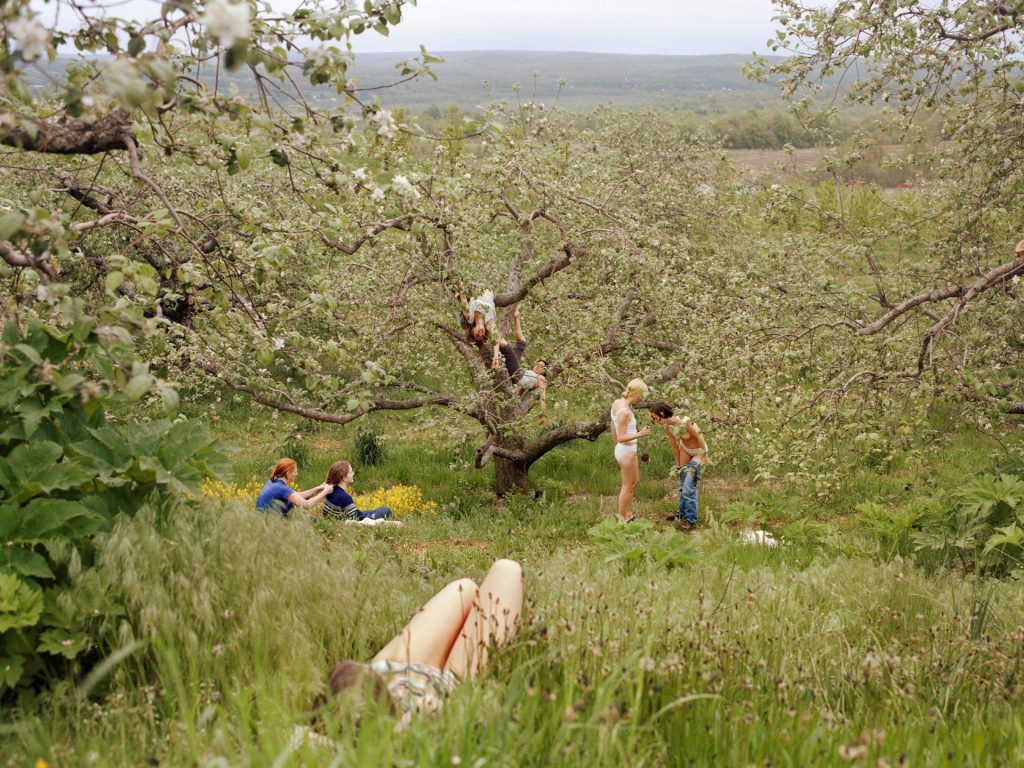
Smell is the most primitive of our senses because receptors in the nose are in direct communication with the centres for emotion and memory deep within the brain. Take time to stop and inhale the fragrance of your scented plants. Their chemical constituents can help prime your mood and influence how relaxed or alert you feel. Lavender, for example, has been shown to be calming through raising levels of the neurotransmitter serotonin, whereas rosemary is stimulating and boosts levels of dopamine and acetylcholine. The smell of roses is associated with alleviating stress and has been found to reduce levels of the stress hormone adrenaline, in one study by as much as 30%.
7. Contemplate
A garden is much more than a physical space, it also provides mental space. This has been the case throughout history where gardens have offered people a form of sanctuary. Try to spend some time each day in mindful appreciation of the natural world around you and resist the impulse to ‘do’ any gardening, at least for a while. When we feel safe in a garden setting like this, our fight-or-flight response is reduced and the parasympathetic system, which gives rise to a state of restorative restfulness, is activated. Beneficial changes occur in the brain’s electrical activity and a lowering of heart rate and blood pressure can be detected within minutes; meanwhile levels of the stress hormone cortisol have been shown to drop after about 20-30 minutes.
8. Celebrate
Beauty is always subjective, but flowers seem to elicit an innate response from us. No matter how elaborate or simple, a flower has balance and harmony, and humans have an affinity with patterns in which regularity is combined with variation. Sigmund Freud had a great love of flowers. He once said: ‘Flowers are restful to look at, they have neither emotions or conflicts.’ Experiencing beauty has been found to be accompanied by neural activation in regions of our brain that are associated with romantic love. These networks are part of our pleasure and reward pathways and play a vital role in integrating our thoughts, feelings and motivations as well as damping down our fear and stress responses. Beauty is often seen as non-essential but it is a form of emotional nourishment.
9. Confront
Tilling the earth connects us with the eternal cycle of life, death and rebirth. In everyday life, there is an inclination to avoid death and grief, but there is no denying that things die in the garden. Yet the beauty of plants as they start to drop their leaves and develop seed heads also carries the promise of regeneration. As the poet and gardener Stanley Kunitz said mortality is ‘the hard reality, perhaps the hardest reality that we have to reckon with’. For him, even the compost heap can serve as a reminder that ‘we are all candidates for composting’. The garden can take the strangeness out of death and make it more ordinary.
10. Diversify
People often feel powerless and despairing about the planetary crisis that we are living through. Given the scale and gravity of the situation, it can be difficult for us to know what contribution we can make as individuals. Maximising biodiversity in your garden is one positive intervention that is achievable not only for us as individuals but also for whole communities. Ecological studies show that gardens that are planted for variety and complexity with plenty of flowers that attract pollinators and where chemicals are not used function as ecological hotspots, are like ‘safe-houses’ for nature. And when it comes to well-being, what is good for nature is also good for us.
Recent stories
-
![]()
Olafur Eliasson: Look Closer no. 3
-
![Tatiana Trouvé | foto: Hélène Pambrun & Thomas Merle, met dank aan de kunstenaar]()
Tatiana Trouvé at Xavier Hufkens: Look Closer no. 2
-
![]()
Kent Guide: From Margate to Manor
-
![Alberto Giacometti, Hour of the Traces, 1932, gips, hout en staal, 69 x 36 x 29 cm]()
That One Moment: Chronos and Kairos
-
![Bar Magritte Hotel, Amigo, Brussels]()
Brussels Bound: City guide
-
![]()
A harmonic universum: A one-of-a-kind pocket watch
-
![]()
William Kentridge: Look Closer no. 1
-
![Marisol Foto: Nancy Astor]()
Between Glamour and Rebellion: Marisol at Depot Boijmans
-
![Helen Frankenthaler met April Mood in haar studio op East 83rd Street in New York, 1974 | © 2026 Helen Frankenthaler Foundation, Inc./ProLitteris, Zurich | foto: Alexander Liberman © J. Paul Getty Trust]()
Helen Frankenthaler & Donald Judd at Kunsthal KAdE: Radical and rigorous
-
![Zeeplokaal]()
Li’s Forecast #11: In praise of soap
-
![Piet Oudolf garden at Noma, Copenhagen]()
Piet Oudolf’s 16 favourite plants: Create your own Oudolf garden
-
![William Kentridge, Waiting for the Sibyl]()
BREAKING #338: She has all the answers
-
![Nicole Ex (rechts) en Sarah Knigge (links) ergens tussen spiegelbeeld, stippen en oneindigheid in Yayoi Kusama’s nieuwe Infinity Mirror Room in het Stedelijk Museum Amsterdam, 9 september 2026]()
BREAKING #337: Yayoi Kusama
-
![]()
BREAKING #336: Body language
-
![Getty Research Institute, Los Angeles, schenking van de Roy Lichtenstein Foundation ter nagedachtenis aan Harry Shunk en Janos Kender | Foto: Shunk-Kender © J. Paul Getty Trust]()
Endlessly innovative: Yayoi Kusama in Amsterdam
-
![Marisol Escobar met haar sculptuur The Kennedyʼs, 1964 | © foto: Sam Falk]()
In the Kitchen with Marisol Escobar: ‘I decided never to talk again’
-
![Justine Kurland, {{Orchard}}, 1998, chromogenic print, 76.2 × 101.6 cm]()
BREAKING #334: The Orchard Project, Part II
-
![Wolfgang Tillmans, Inner City Apple Tree, 2004]()
BREAKING #333: An orchard for the future
-
![]()
Which room did you fall in love with?: Send us your all-time favourite cinematic room
-
![]()
BREAKING #332: In love with a room