The Dinner Party

How shared meals can change your life
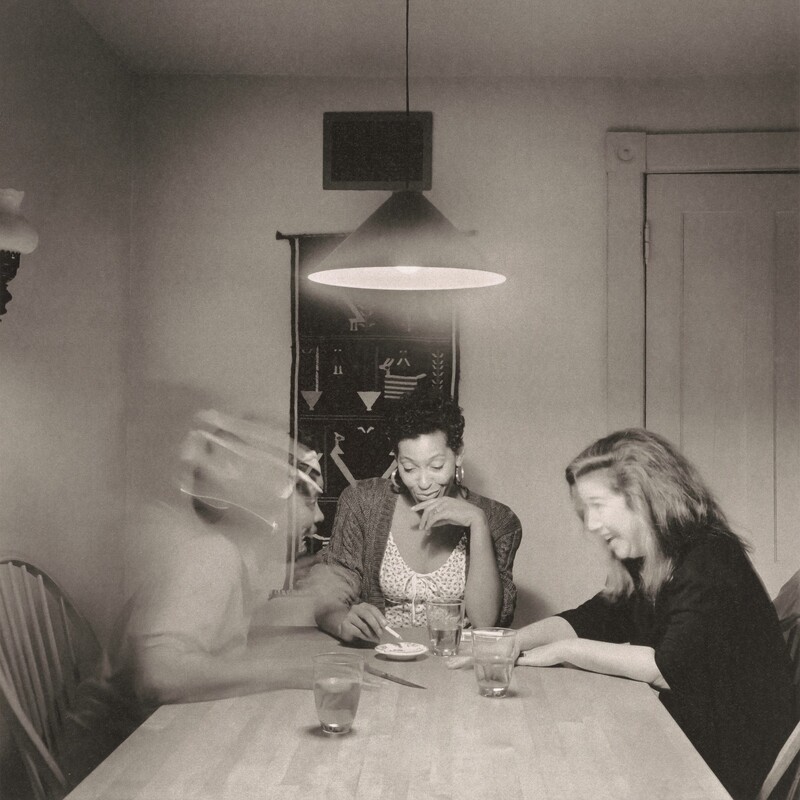
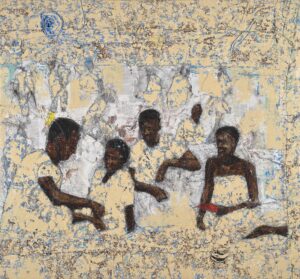
Carrie Mae Weems, Untitled (Woman with Friends) from The Kitchen Table Series, 1990, platinum print
Fig 1. Carrie Mae Weems, Untitled (Woman with Friends) from The Kitchen Table Series, 1990, platinum print | © Carrie Mae Weems, courtesy of the artist and Jack Shainman Gallery, New York
text: Jessica Collins

Every Thursday, Teeny Booker, my grandmother, would open her fridge and take out the eleven pork chops she had set to marinate two days earlier. She laid them out for a last seasoning, tenderising the meat to the melody of ‘This Little Light of Mine – I’m gonna let it shine’. The sound of her song steeped her in the smell of Sunday dinners roasting in her mother’s kitchen.

Teeny peeled the skin off a dozen Yukon potatoes and drew them a bath. She rough-chopped two bags of carrots and spread them on foil – hours later they’d tumble with the meat and potatoes, with pinches of salt, black pepper, and a few dollops of butter. This was her recipe, but also her ritual. Tried and true, a match to flame – grandmother to grandmother to grandmother.

We were a family of women, and since my mum was the eldest sister, my aunties and their kids squeezed into our backseat – a good-looking colony of care and joy making its way to Grandma’s house to eat what she was cooking, and then watch The Cosby Show. On the ride over, we were hungry for a decent story and great music, but by the time we got to the main road, conversation turned to recipes and rumours, with confessions: Aunt Mary used brown instead of white sugar for her skillet cornbread, because it seemed the Blackest way to make it. A few blocks later, they’d be quizzing Aunt Kristina, trying to guess the fruit in her crumble – a dessert that always carried the season. And there I’d be, silent in the front seat, taking my family in like a good meal.

Most life lessons were taught to me in Teeny’s kitchen. She taught me about temptation and when to take it, or leave it, after I touched a hot pan when she’d warned me not to. She taught me to put myself first, by setting down the spatula and pouring us both a tall glass of lemonade before anyone else was served. I was a good student and studied her every move as she floated from stovetop to pantry, tiny as Tinker Bell, sprinkling our supper with laughter and delight.

As I grew older, and life lessons expanded beyond my Grandmother’s kitchen, different women entered my life. Women who taught me how to write simple stories about the world around them, often through community and its food. My mom gave me a copy of Zora Neale Hurston’s Mules and Men (which I still carry around in my handbag), a book which tells of shared eating as a part of Black life, with chitlins, pig’s feet and peanuts anchoring scenes. In The Bluest Eye, Toni Morrison writes about households of women, and how their kitchens and dinner routines – so starkly contrasted – reveal the different ways two homes are run and how those daily rituals shape a child. 

When in college, it was Nora Ephron and her dinner party romcoms that got me through my first big break-up. She tuned my ear to how food finds itself at the centre of the most joyous, mundane, and devastating moments of life. I think of Heartburn’s protagonist, Rachel Samstat, when she throws a key lime pie in her husband’s face during a dinner party, or the iconic scene in When Harry Met Sally when Sally fakes an orgasm in a busy restaurant. 

Then I got pregnant unexpectedly with a man who loves to host dinner parties, but can’t cook a thing. And in the rush to normalise a future I thought would be doomed (it wasn’t, thankfully!) I dove into the pragmatic feminism of Julia Child who, with her self-directed career, awakened me to the idea of kitchen feminism. 

So often dinner parties and the impossible pursuit of domestic excellence go hand in hand. Yet, as I tell my children, every family is different. A friend offered an image of her father, always missing from the table during dinner parties. While friends and family circled round, he would excuse himself, lace up his trainers, and slow-jog up and down the dirt road in front of the home. When dinner was over and dishes done, he’d come back in, take his plate, and sit on a little wicker chair in the corner of the kitchen, eating on his lap in peace. Her father’s ritual held a lesson about the line between keeping boundaries and shirking duty as father, husband, and host.

I spoke with another friend, the son of an ambassador who grew up in a house hosting dinner parties with dissidents – his parents in black tie, him in pyjamas on a pillow under the dining table. At these dinners, he described how the subject tracks the meal. Canapé conversation is kept light as caviar – ‘How are the kids?’ By the plat principal, the dialogue pivoted to global issues like human rights, gender equity, and access to education. From under the table, this boy learned how shared meals can help change the course of history.

I’ve given up on being the family martinet. After years of ‘sit down, sit still, sit tight’, I’ve let my kids know I’m going to let the world teach them how to behave at a dinner party. I made this decision not because I want them to be the ones who talk through a mouthful of mashed potato, but because what will inform their experience of gathering around food with family and friends is not how much they ate or how little they slouched, but simply how it felt to be together.

While it’s important to reflect on big-impact gatherings – like these ones – for most of us the dinner party is a dream folded into everyday life. Some of these dreams are big and all-consuming, and some dinner parties will change the way society remembers itself. We all have our own version of what it means to gather and break bread. For many of us, the thought of hosting a dinner party makes us a nervous wreck because we get caught up in the ego of it all. But then I think of Grandma Teeny singing to her pork chops, cutting up carrots and salting potatoes for the women in her life she can’t wait to feed.


Salvador Dalí and Gala’s fundraiser party A Surrealist Night in a Surrealist Forest, 1941, Monterey
Fig 2. Salvador Dalí and Gala’s fundraiser party A Surrealist Night in a Surrealist Forest, 1941, Monterey

How to host like an artist?

Read about the legendary artist’s dinner parties, from Dalí to Judy Chicago >


Recent stories