Pizza
The Crispy Canvas Reflecting our History, Identity and Future
There is no better way to look at our history than through the lens of our food, Louise O. Fresco says. The acclaimed scientist, writer and thought leader in food, agriculture and sustainability explores the evolution of food through one iconic dish: pizza. ‘Even the humble, white pizza hides many stories, for it was never purely local.’
Humans are unique among animals because we eat our food as meals. We do not simply consume whatever edible items we encounter; instead, we produce the raw materials, prepare them, and consume them in countless ways, often in the company of others. From this, we draw our identity and moral values, both as individuals and as communities. Everything we eat carries a long history of origin, migration and transformation, shaped by knowledge, beliefs and convictions.
Across nearly every culture, staple foods follow a similar pattern, although the ingredients vary with local resources. At the core lies a trinity of carbohydrates (starch), protein and fat. Carbohydrates are provided by grains and tubers – mainly wheat, rice, corn, millet, potatoes, yams and cassava. Since the gradual development of agriculture more than twelve thousand years ago, these carbohydrates have been the main source of calories. They are often paired with beans – soybeans in China, lentils and chickpeas in the Middle East and India, and various local beans in Africa and Central America. This pairing is powerful: grains and beans contain complementary amino acids, the building blocks of proteins, making them more nourishing than when eaten separately. This was a significant evolutionary milestone for humankind.
Wheat starch is the most versatile of all carbohydrates: eaten unleavened or leavened, as bread, croissants, pancakes and coffee rolls, as well as Eastern European blinis, Indian naan and roti, or Turkish simit and, of course, pizza – an enduring icon of the evolution of our food.
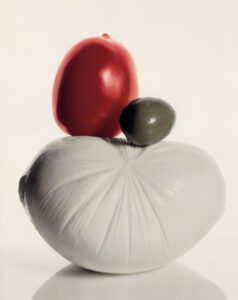
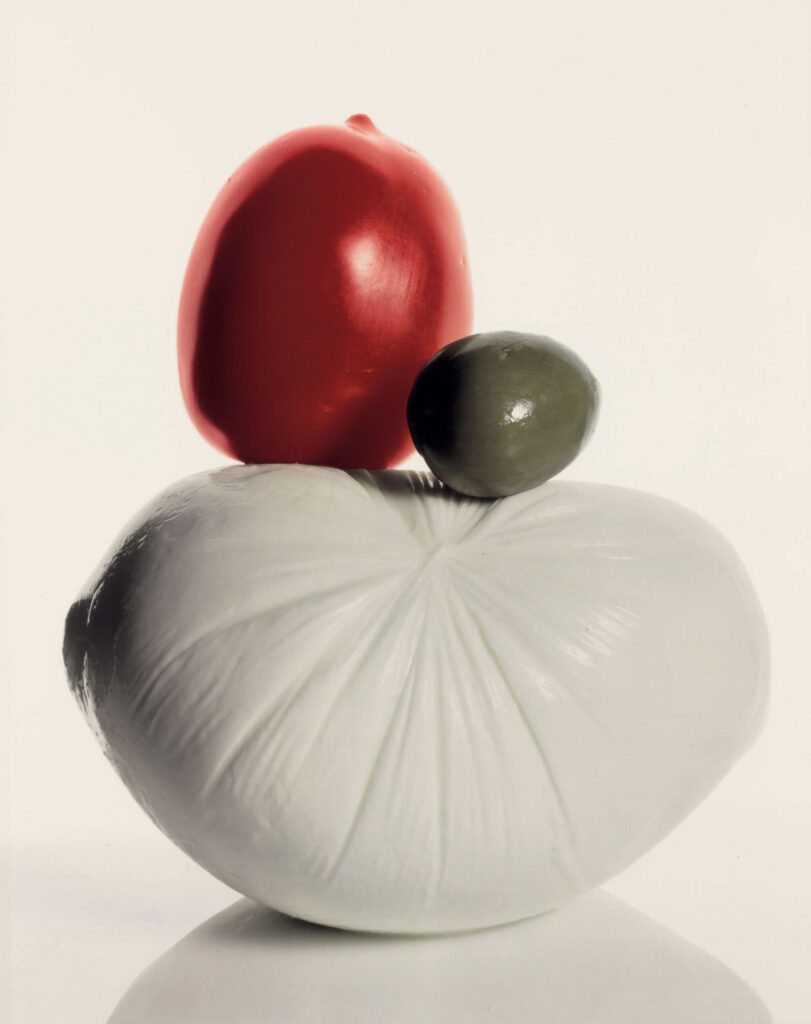
Irving Penn (1917-2009) was one of Vogue’s leading photographers for more than sixty years. With a painter’s eye, he elevated the banal to the exquisite – especially in his food still lifes, where he was a perfectionist. ‘If we were photographing a hand holding a pizza, it had to be the pizza-maker’s hand,’ said his close collaborator Phyllis Posnick.
Recent stories
-
BREAKING #305: It grew dark, but we didn’t need any light.
-
![]()
Li’s Forecast #8: Patterns in textile
-
![]()
Asma’s Beauty Case: ‘Who am I actually working for?’
-
![David Claerbout The Woodcarver and the Forest]()
There’s No Movement Without Friction: Director David Claerbout on ‘The Woodcarver and the Forest’
-
![Magdalene Odundo, Untitled #7 (1994)]()
BREAKING #304: ‘If you have not stood face to face with something, it has simply not truly been known by you.’
-
![]()
BREAKING #303: ‘That dizzying, hopeless procession of transformations’
-
![Judy Chicago, Peeling Back, 1974. Jordan Schnitzer Family Foundation Collection. - Judy Chicago, Peeling Back, 1974. Offset fotolithografie op ragpapier, 72,39 × 55,88 cm. Collectie Jordan Schnitzer Family Foundation. © Judy Chicago / Artists Rights Society (ARS), New York. Foto © Donald Woodman / ARS, NY. Courtesy of the artist]()
The Making Of:: Judy Chicago in Amsterdam
-
![1-54 Contemporary African Art Fair Marrakech]()
Morocco: a playground for progressive art: 1-54 in Marrakech
-
![Smileys van Maria Roosen]()
Li’s Forecast #7: Solid Energy
-
![]()
Chef’s Favourites: Books, films, restaurants and recipes
-
![Alymamah Rashed in haar studio | © Mateusz Stefanowski, courtesy Dior]()
A landscape, archive and statement: The iconic Lady Dior reimagined by artists
-
![The Islington Twins in front of Rembrandt's Nightwatch at the Rijksmuseum, Amsterdam, 7 December 2025]()
A Weekend with The Twins: In Amsterdam
-
![Chef Mory Sacko, guest-curator of See All This #40, wearing one of the hand-painted aprons at See All This' Dinner Party, 6 December 2025 | photo: Katerina Bezede]()
A Taste of Mory’s Magic: Recreate His Festive Soup Dish at Home
-
![The Islington Twins for Burberry]()
Fruits, Fats & Fundaments: Lessons in Nutrition from the Streets of London
-
![The Dinner Party, 6 december 2025, Felix Meritis Amsterdam | foto: Katerina Bezede]()
The Dinner Party: 10 Years See All This
-
![]()
The Gentle Radicalism of Eating Together: A Night with The Macallan at Flore
-
![Nicole Ex tijdens haar speech, The Dinner Party, See All This, 6 december 2025]()
10 years of See All This: ‘Do you like the party?’
-
![Joseph Beuys, Fat Chair, 1964, fat, wax, barbed wire, wooden chair, 41.6 x 94.5 cm]()
Feeding the Eye: A Visual Banquet
-
![Hilma af Klint, De zwaan, serie
SUW/UW, groep IX: deel I, nr. 16, 1915, olieverf op doek, 154,5 × 154,5 cm]()
Why Doctors Are Prescribing Art: 10x When Art Becomes Medicine
-
![]()
Pizza: The Crispy Canvas Reflecting our History, Identity and Future