Asma’s Beauty Case
‘Who am I actually working for?’

For years, I wondered who I was actually working for. Not in an existential sense, but practically. Who reads this, and the work I’ve made before? Who recognises themselves in it? Who feels addressed, seen, taken seriously?
When I was seventeen and just starting out as an aspiring creative, I made something tangible for others to look at. That was simple. Clear. But once you become part of the fashion magazine system, something shifts. You begin working within a world that largely confirms itself. You think you’re communicating, when in fact you’re mostly circulating. There was endless talk of ‘the woman’: style, travel, aspiration. But rarely of a woman who carries multiple cultural realities at once. Who refuses to be reduced to a single identity, narrative or aesthetic. Someone unafraid of complexity, who remains curious, who prefers substance to explanation. That woman was seldom addressed explicitly – and perhaps for that very reason so often overlooked. Strikingly, alongside cultural perspectives, genuine art perspectives were often missing too.
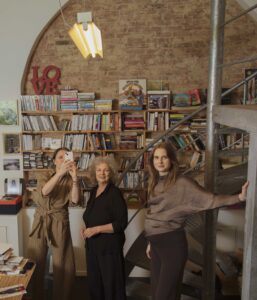
The turning point came through an unlikely move: I created a group chat with the guests of a dinner I host every few months. Five women, connected through life in Amsterdam and overlapping circles, through curiosity and conviviality. In these conversations, ambition and doubt are allowed to coexist. Care is not the opposite of success, but part of it. Difference has space, without the need for sameness. And – not unimportant – I laugh until I can’t breathe.
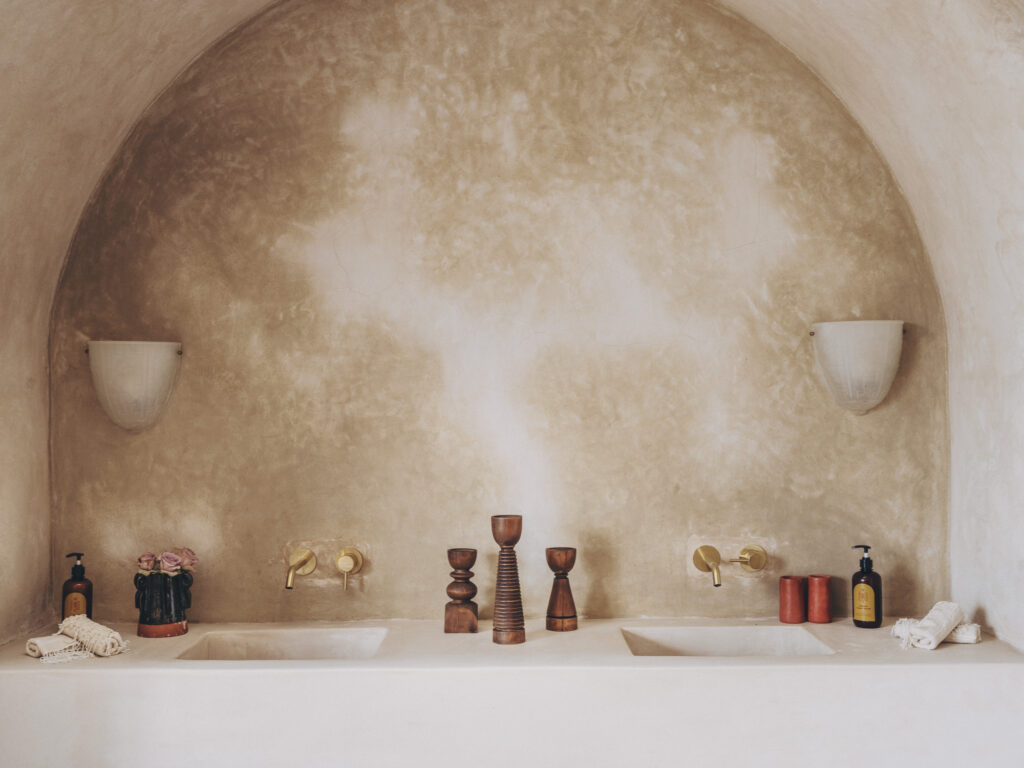
‘In these conversations, difference has space, without the need for sameness. And – not unimportant – I laugh until I can’t breathe’
S. works in PR, where institutions and brands intersect and reputations are carefully constructed – often reason enough for uncontrolled fits of laughter. N. is on the editorial team of one of the largest fashion media brands in the world, while running her own event production company on the side. She moves effortlessly between projects, often in beautiful shoes. F. produces olive oil in Spain and consciously chooses a life in which care is as essential as ambition. No retreat or wellness trend passes her by. She herself is as calm as a leaf in the wind. H. left a senior role in corporate PR to start her own boutique agency, with art and design as its natural foundation, yet equally capable of serving corporate clients. An organisation enthusiast with an extraordinary eye for detail.
And me.
Our cultural backgrounds and faiths differ: Amazigh, Dutch, Argentinian, Jewish, Brabants, Muslim. The group chat has become an anchor. I send observations, loose thoughts, small fragments. We celebrate one another – and our victories, large and small.
And then it clicked. I understood who all these carefully composed worlds are made for. Not abstractly, but very concretely. For people who know what they’re looking at. Who recognise places, sense materials, travel with intention. Who don’t consume to distinguish themselves, but to shape their lives with care.
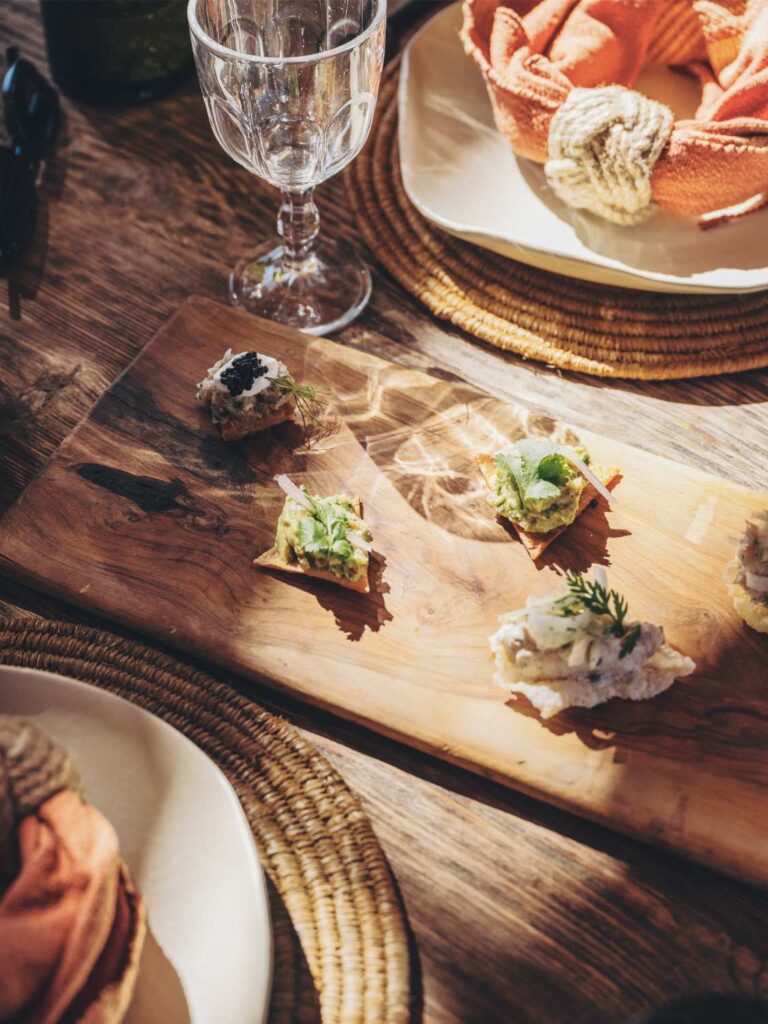
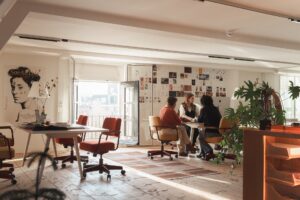
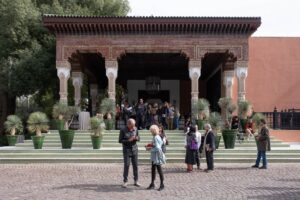
I’m writing this from Marrakech, where I’m visiting the 1-54 Contemporary African Art Fair. I’m staying at Riad Nyla, owned by the Italian Chiara Toffoli, who has since settled in the heart of the medina. Outside, the rhythm is intense – sometimes overwhelming. Inside, everything slows. Soft colours, filtered light, spaces composed with precision. Not theatrical luxury, but a form of attention you immediately recognise, if you’re attuned to it.
After a few days, I move to Riad Le Pèlerin – a slightly younger, cooler sister to Nyla, yet just as thoughtful – and later to Farasha Farmhouse. All places already familiar within my network: long on wish lists, already shared, discussed, recognised. That makes the difference. It doesn’t feel like recommending, but confirming. I’m here because I believe in what is being made. Le Pèlerin is the ultimate urban hangout: slow food, swift and generous service.
At Farasha Farmhouse, that belief is almost tangible. Everything here begins with care. The land, the people, the pace. What arrives on the table grows here: tomatoes, aubergines, lemons, lettuce. Nothing transported unnecessarily, nothing embellished beyond what it is. Nor does it need to be – it is breathtaking as it stands. This is farm-to-table as intended: without theatre, under the guidance of chef Aniss Meski.
And that brings me back to my opening question. I now know who I work for. Not for an abstract reader, not for an industry that primarily looks at itself, but for people who live attentively. That realisation changes how I look, how I write – and, perhaps most importantly, what I no longer feel compelled to do. Because knowing who you work for also means knowing what you can leave behind.
And I wholeheartedly wish these places upon you – and those wonderful people the pleasure of being visited by you, my loyal reader.
Recent stories
-
![]()
Self-discipline: ‘Reality, rhythm and roots’
-
![]()
-
![]()
Nature: ‘An equal co-creator’
-
![]()
Collectivism: ‘Not driven by ego’
-
![]()
Animism: ‘Reverence for the forest and the river’
-
![]()
Human vs. machine: ‘The hopeless future’
-
![]()
Metamorphosis: ‘Manipulation is timeless’
-
![]()
Art Unlimited: Editorial #41
-
![]()
Asma’s Beauty Case: ‘History moves slowly’
-
![]()
BREAKING #307: ‘We are in what passes away’
-
![]()
BREAKING #306: ‘I’m not a performing monkey’
-
![]()
BREAKING #305: It grew dark, but we didn’t need any light.
-
![]()
Li’s Forecast #8: Patterns in textile
-
![]()
Asma’s Beauty Case: ‘Who am I actually working for?’
-
![David Claerbout The Woodcarver and the Forest]()
There’s No Movement Without Friction: Director David Claerbout on ‘The Woodcarver and the Forest’
-
![Magdalene Odundo, Untitled #7 (1994)]()
BREAKING #304: ‘If you have not stood face to face with something, it has simply not truly been known by you.’
-
![]()
BREAKING #303: ‘That dizzying, hopeless procession of transformations’
-
![Judy Chicago, Peeling Back, 1974. Jordan Schnitzer Family Foundation Collection. - Judy Chicago, Peeling Back, 1974. Offset fotolithografie op ragpapier, 72,39 × 55,88 cm. Collectie Jordan Schnitzer Family Foundation. © Judy Chicago / Artists Rights Society (ARS), New York. Foto © Donald Woodman / ARS, NY. Courtesy of the artist]()
The Making Of:: Judy Chicago in Amsterdam
-
![1-54 Contemporary African Art Fair Marrakech]()
Morocco: a playground for progressive art: 1-54 in Marrakech
-
![Smileys van Maria Roosen]()
Li’s Forecast #7: Solid Energy