The Making Of:
Judy Chicago in Amsterdam
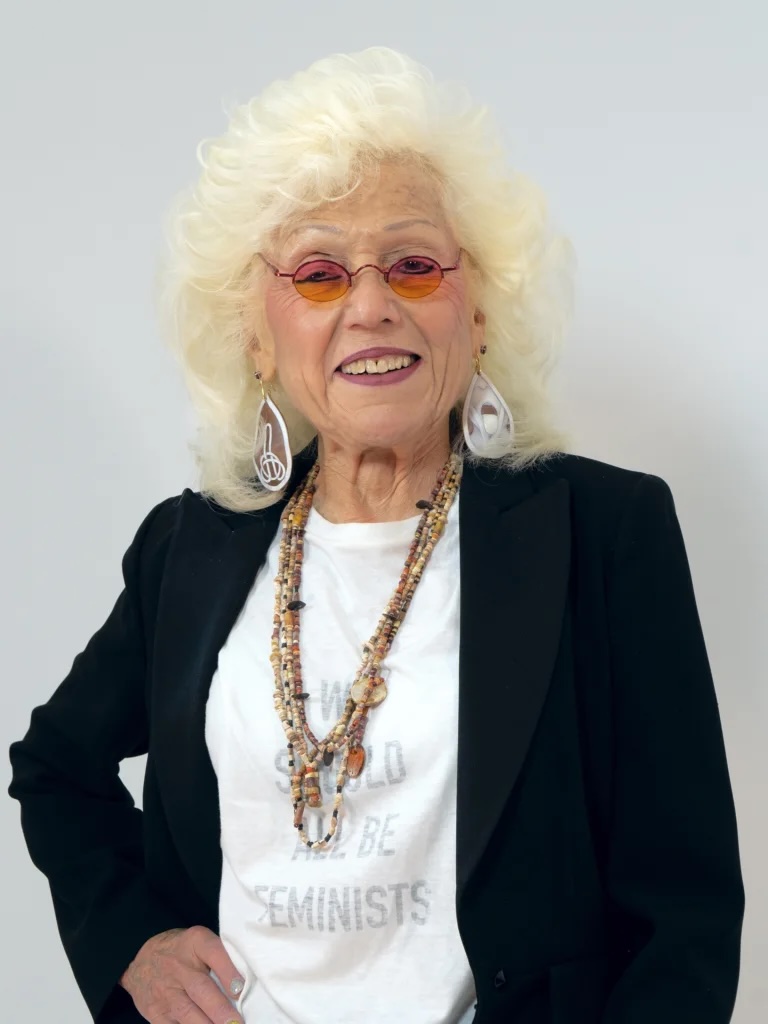
Judy Chicago is one of the founding figures of feminist art, yet for a long time her work was rarely shown in the Netherlands. Until now. This spring, the Jewish Museum in Amsterdam presents a major retrospective of this pioneer. Curator Judith Hoekstra reflects on how the exhibition came into being.
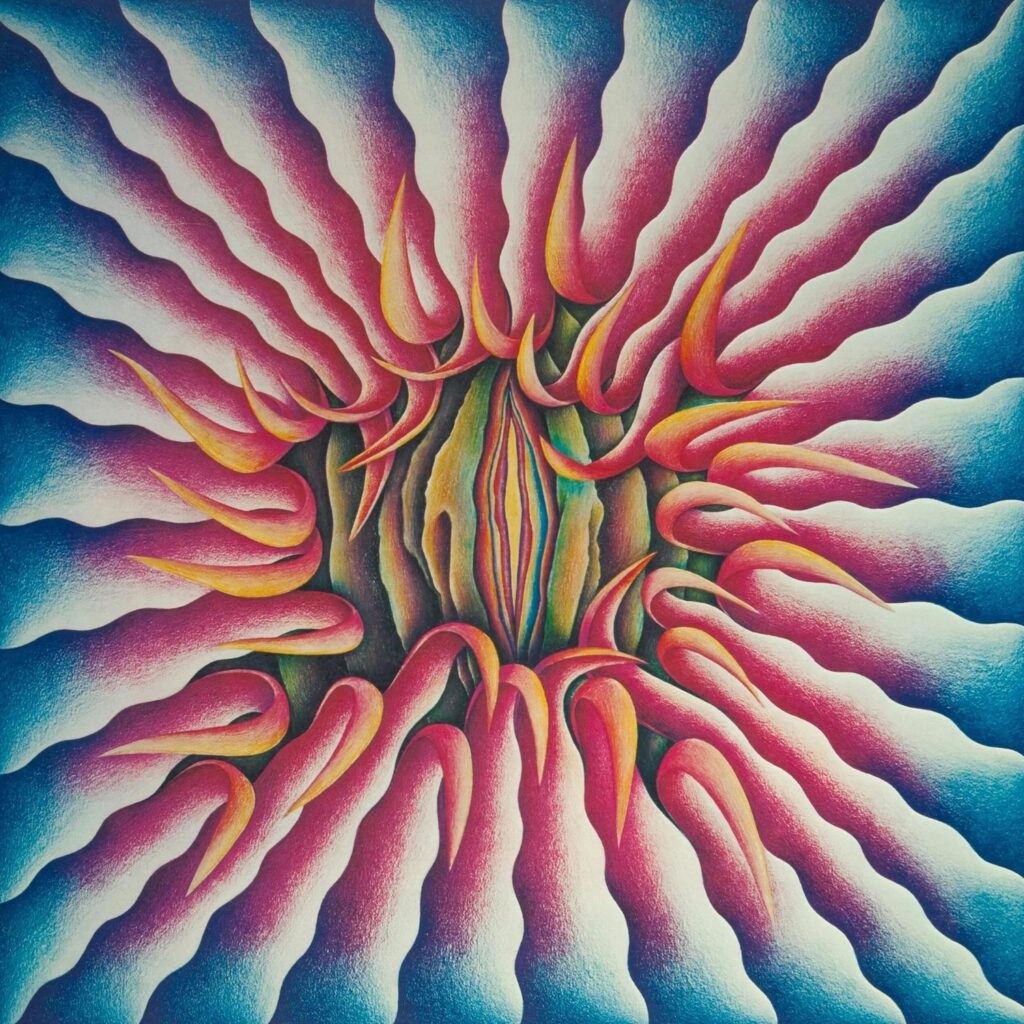
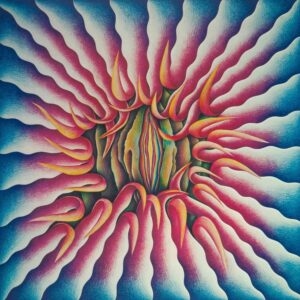
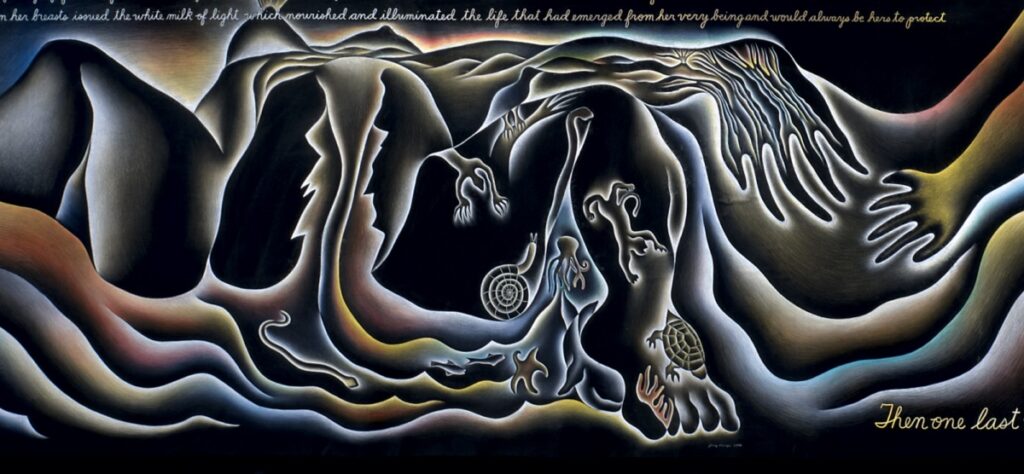
In 2014, I spent a semester studying at the Freie Universität in Berlin. There, I took the course Kunst und Feminismus, which focused specifically on art connected to the second wave of the women’s movement, from the 1960s to the 1980s. Judy Chicago (b. 1939) was the only artist to whom an entire lecture was devoted; she was presented as the founding figure of the feminist art movement. Her large-scale, groundbreaking collaborative projects – in which she places women and their often overlooked roles in history at the centre – such as The Dinner Party (1974-1979) and Birth Project (1980-1985), were discussed in depth.
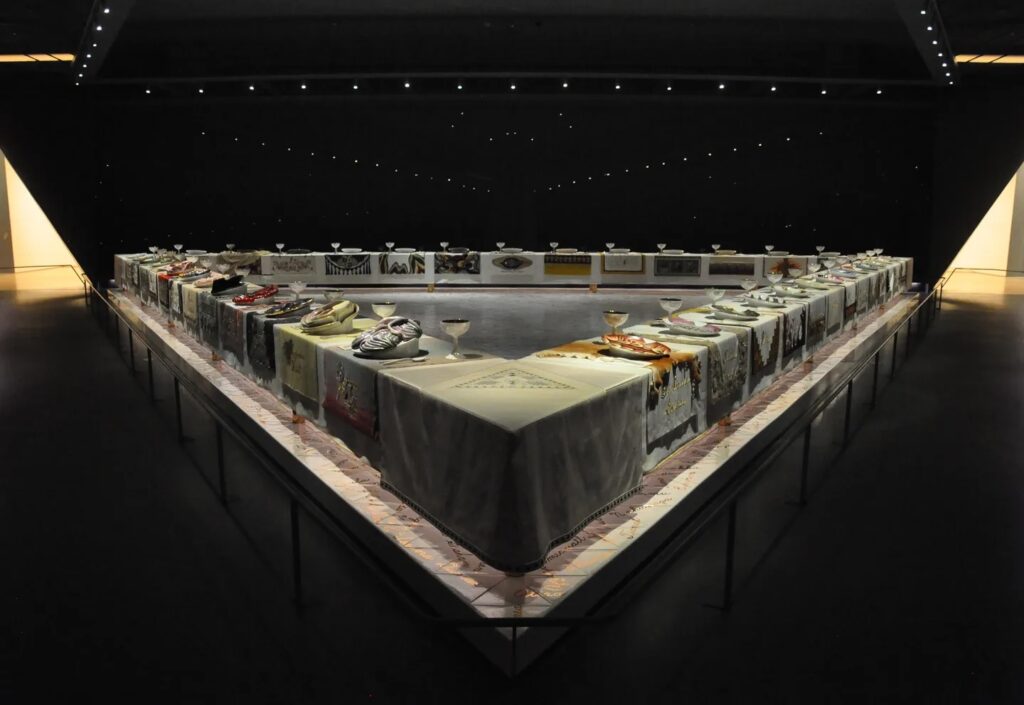
That course made a lasting impression on me. Ever since, I have often been struck by the fact that – despite Chicago’s immense influence and prominent position within the Western art-historical canon – her work has been scarcely presented in the Netherlands and Europe. In 2024, several of her works were shown at the Jewish Museum as part of the exhibition Sex: Jewish Positions. This prompted me to explore whether it might be feasible for the Jewish Museum to organise the first retrospective of Judy Chicago in the Netherlands.
An initial survey revealed that very few of Chicago’s works are held in European collections, meaning that almost everything would have to be brought over from the United States – a considerable logistical and financial challenge. Around the same time, the exhibition Judy Chicago: Revelations was on view at the Serpentine Galleries in London. Through a curator friend, I came into contact with Chris Bayley, the curator of that exhibition, to ask him about his approach to developing the show.
In December 2024, I met Chris in London. He told me that Judy Chicago: Revelations would travel on to Kunsthalle Recklinghausen, where the exhibition was set to open in May 2025. As no subsequent venue had yet been confirmed, he asked whether the Jewish Museum might be interested in taking on the exhibition. I saw this as an exceptional opportunity: a major retrospective of around two hundred works, spanning the full breadth of Chicago’s oeuvre, located at that moment quite literally just across the border from the Netherlands. We are now fully engaged in preparing the exhibition, which will open at the Jewish Museum on 6 February.
The exhibition takes its title from Revelations, a manuscript Judy Chicago wrote in the early 1970s during the development of The Dinner Party. First published by Serpentine, the manuscript offers a radical reinterpretation of mythological creation stories, alongside Chicago’s vision of a more just world. The exhibition is structured thematically around the five chapters of Revelations and places particular emphasis on Chicago’s drawings – a fundamental medium within her practice – complemented by new work, archival material, previously unseen artworks, video pieces and participatory elements.
With this exhibition, Dutch audiences are finally given the opportunity to see the full scope of Judy Chicago’s work, and after more than fifty years of artistic practice, she at last receives in the Netherlands the recognition she deserves.
Chicago herself feels that presenting her work within the context of the Jewish Museum is particularly fitting: ‘The exhibition Revelations exposes unknown aspects of my work as well as my belief system, one that is rooted in Jewish values, specifically in the concept of tikkun olam or the healing and repairing of our world, which is more necessary now than ever. I have devoted my life to carrying out this mandate, one that my father passed on to me when I was a child. He taught me that the purpose of life was to make a contribution to a better world, one in which equity prevails for all who share this planet, both human and not human.’
The exhibition Judy Chicago: Revelations will be on view from 6 February until 23 August 2026 at the Jewish Museum in Amsterdam. Read more about it here.
Recent stories
-
![Spread uit See All This no.40. foto: Katerina Bezedei]()
-
![]()
Rituals: ‘Not static or nostalgic, but alive’
-
![]()
Self-discipline: ‘Reality, rhythm and roots’
-
![]()
-
![]()
Nature: ‘An equal co-creator’
-
![]()
Collectivism: ‘Not driven by ego’
-
![]()
Animism: ‘Reverence for the forest and the river’
-
![]()
Human vs. machine: ‘The hopeless future’
-
![]()
Metamorphosis: ‘Manipulation is timeless’
-
![]()
Art Unlimited: Editorial #41
-
![]()
Asma’s Beauty Case: ‘History moves slowly’
-
![]()
BREAKING #307: ‘We are in what passes away’
-
![]()
BREAKING #306: ‘I’m not a performing monkey’
-
![]()
BREAKING #305: It grew dark, but we didn’t need any light.
-
![]()
Li’s Forecast #8: Patterns in textile
-
![]()
Asma’s Beauty Case: ‘Who am I actually working for?’
-
![David Claerbout The Woodcarver and the Forest]()
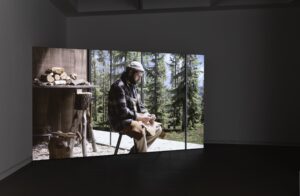
There’s No Movement Without Friction: Director David Claerbout on ‘The Woodcarver and the Forest’
-
![Magdalene Odundo, Untitled #7 (1994)]()
BREAKING #304: ‘If you have not stood face to face with something, it has simply not truly been known by you.’
-
![]()
BREAKING #303: ‘That dizzying, hopeless procession of transformations’
-
![Judy Chicago, Peeling Back, 1974. Jordan Schnitzer Family Foundation Collection. - Judy Chicago, Peeling Back, 1974. Offset fotolithografie op ragpapier, 72,39 × 55,88 cm. Collectie Jordan Schnitzer Family Foundation. © Judy Chicago / Artists Rights Society (ARS), New York. Foto © Donald Woodman / ARS, NY. Courtesy of the artist]()
The Making Of:: Judy Chicago in Amsterdam