Metamorphosis
‘Manipulation is timeless’
We asked seven curators and directors to look ahead. Which themes and trends will shape the conversation in the coming years? And which artists are already showing where things are headed? Frits Scholten is curator of sculpture at the Rijksmuseum in Amsterdam. This spring, the exhibition Metamorphoses, which he curated, is on view there. The exhibition was realised in collaboration with the Galleria Borghese in Rome.
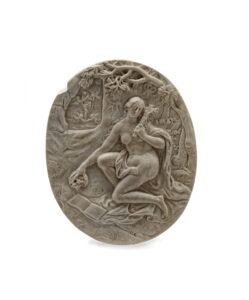
Everything is in motion, changes, but never completely disappears. This universal insight came to the poet Ovid at the beginning of our era. In his Metamorphoses he elaborated on this idea through numerous transformations manifesting on human, natural, and supernatural levels. Among the artists inspired by this, one stands out to me: the sculptor Gian Lorenzo Bernini (1598-1680). Like no other, he knew how to make the process of transformation visible. He did so by reversing the roles: not the artwork, but the viewer moves.
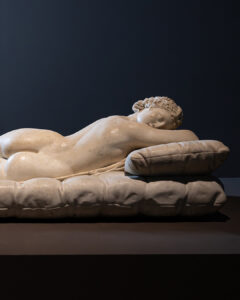
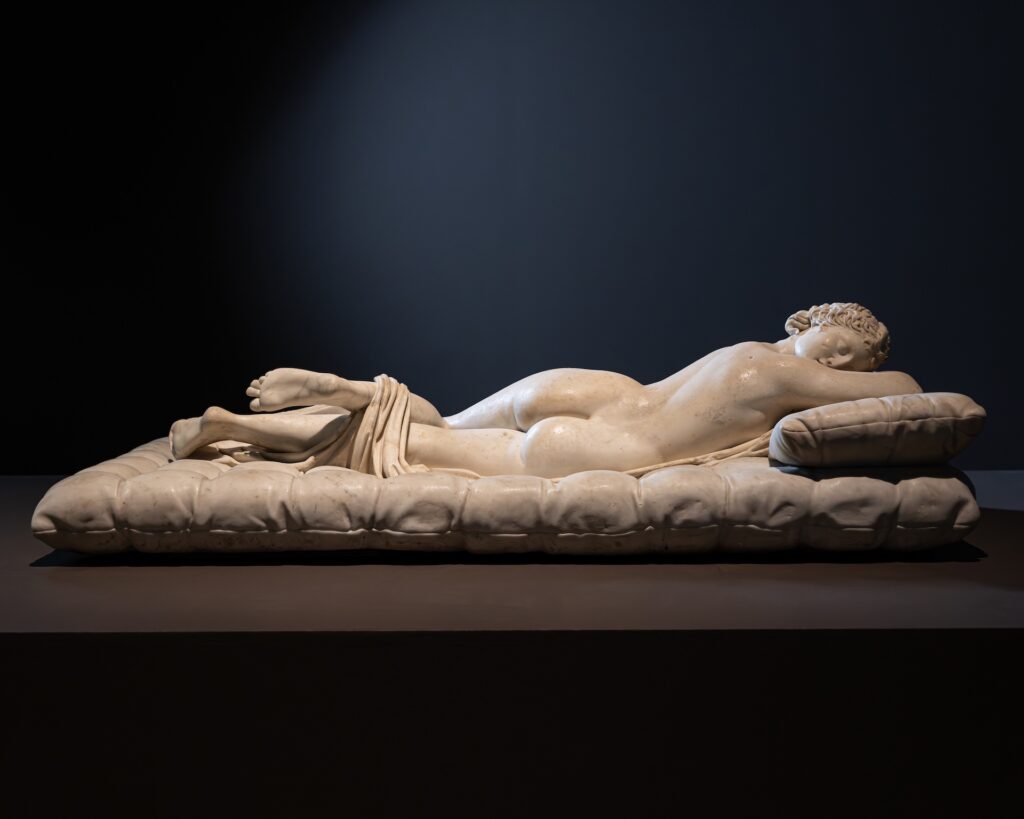
Bernini first applied this in his adaptation of an excavated Roman sculpture of a reclining, nude Hermaphroditus, the youngster who was assaulted by a lovestruck water nymph and, through divine intervention, merged with her into one new, androgynous being. For the sculpture he made a mattress of marble on which Hermaphroditus sleeps. From behind it appears as a sensual, slumbering woman, loosened from her sheet. This pose provokes – voyeurism is not foreign to anyone – the urge to view her front as well. Walking around the statue, the gender transition unfolds as it becomes clear that she has both breasts and a penis and is neither woman nor man.
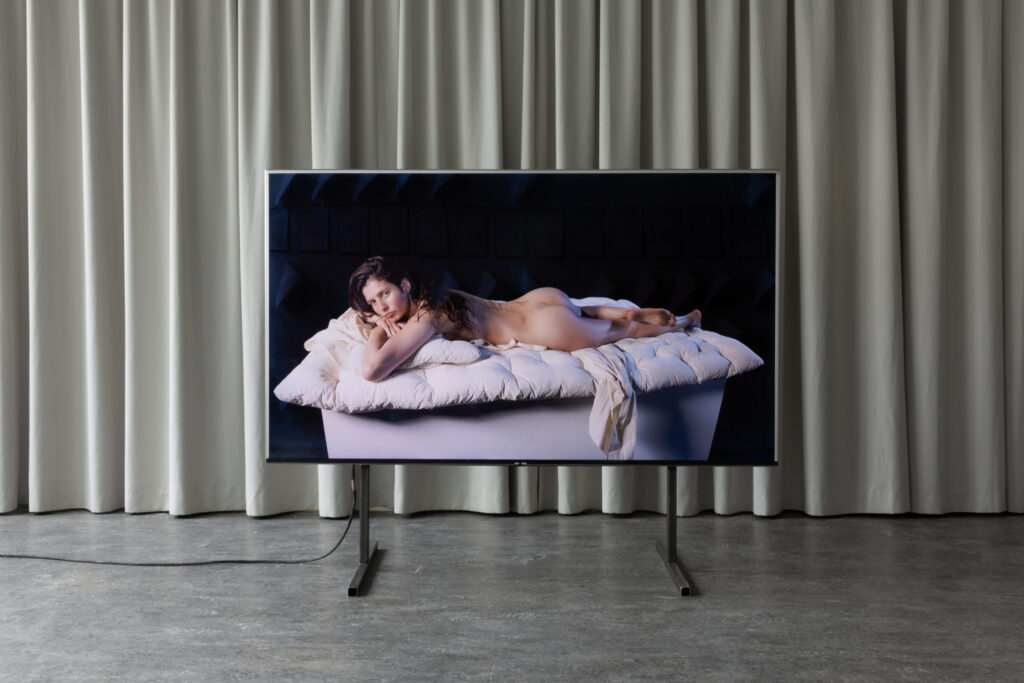
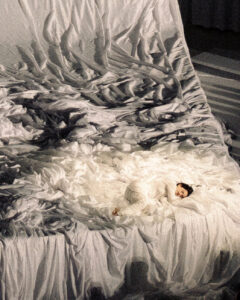
For the artist Sharan Bala (1986), herself intersex, Bernini’s sculpture had a liberating effect: as her graduation project at the Rietveld Academy in Amsterdam in 2022, she installed her medical file page by page on a wall, and opposite to it a screen showing herself as Bernini’s Hermaphroditus. Not slumbering, but looking directly at the viewer standing between her and her medical archive. A cathartic self-examination, but above all a sharp critique of the coercive medical gaze that, since her birth, subjected her for years to involuntary treatments and unnecessary interventions in an attempt to conform her to prevailing norms. Manipulation is timeless.
Ovid prompts critical thinking and calls on us to be more aware of change. Not only medical and cosmetic, but also cosmic. In the Metamorphoses he lets the earth itself speak, because to him she is also an ensouled, living organism: If sea and earth and the poles of heaven are to be destroyed, we return to the former chaos. Save from the flames whatever still remains, and take care of the happenings in the world.
The poet believed in souls that move from body to body and constantly change form, in the continuity of everything. But what if the soul of Mother Earth also migrates? Is the crisis of our world merely a metamorphosis? Or do we, along with her, lose the feminine within ourselves – the human dignity, empathy, and care for one another?
This is an article from See All This #41, spring 2026.
Recent stories
-
![]()
-
![Spread uit See All This no.40. foto: Katerina Bezedei]()
-
![]()
Rituals: ‘Not static or nostalgic, but alive’
-
![]()
Self-discipline: ‘Reality, rhythm and roots’
-
![]()
-
![]()
Nature: ‘An equal co-creator’
-
![]()
Collectivism: ‘Not driven by ego’
-
![]()
Animism: ‘Reverence for the forest and the river’
-
![]()
Human vs. machine: ‘The hopeless future’
-
![]()
Metamorphosis: ‘Manipulation is timeless’
-
![]()
Art Unlimited: Editorial #41
-
![]()
Asma’s Beauty Case: ‘History moves slowly’
-
![]()
BREAKING #307: ‘We are in what passes away’
-
![]()
BREAKING #306: ‘I’m not a performing monkey’
-
![]()
BREAKING #305: It grew dark, but we didn’t need any light.
-
![]()
Li’s Forecast #8: Patterns in textile
-
![]()
Asma’s Beauty Case: ‘Who am I actually working for?’
-
![David Claerbout The Woodcarver and the Forest]()
There’s No Movement Without Friction: Director David Claerbout on ‘The Woodcarver and the Forest’
-
![Magdalene Odundo, Untitled #7 (1994)]()
BREAKING #304: ‘If you have not stood face to face with something, it has simply not truly been known by you.’
-
![]()
BREAKING #303: ‘That dizzying, hopeless procession of transformations’