Human vs. machine
‘The hopeless future’
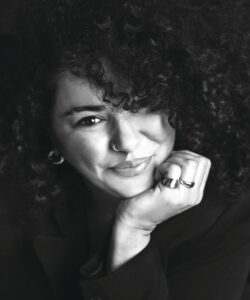
We asked seven curators and directors to look ahead. Which themes and trends will shape the conversation in the coming years? And which artists are already showing where things are headed? Heske ten Cate is a curator, researcher and director, and since February curator of contemporary art at the Amsterdam Museum. Previously she was editor-in-chief of Mister Motley, director of Nest in The Hague, and co-curator of Good Mom / Bad Mom at the Centraal Museum in Utrecht.
The end of a year in the media invariably begins with lists. The best exhibitions, the finest performances, the most important books. And with previews: what should we pay attention to, what is coming? I like to read those speculative outlooks. This past year there were strikingly few of them. Perhaps that has to do with what researchers call the ‘collapse of the future’: the phenomenon that in times of stacked crises, the ability to think far ahead comes under pressure. When uncertainty becomes structural – economic, ecological, political and technological – the long-term perspective disappears. Decision-making focuses on the immediate now: managing, reacting, and not: dreaming. I hear many artists, theatre-makers and curators openly wondering what actually is the defining story of our time.
In addition, the media themselves offer less and less grip. They are flooded with noise: deepfakes, disinformation, half-true stories. The uncomfortable feeling that you are not sure whether what you read is accurate, has become almost permanent. In 1984, George Orwell already showed what happens when language is compressed into slogans and abbreviations. Where words disappear, nuance disappears. Where nuance disappears, truth becomes malleable. And somewhere in that process, our humanity toward one another crumbles. It is not without reason that his dystopia is being dusted off en masse once again.
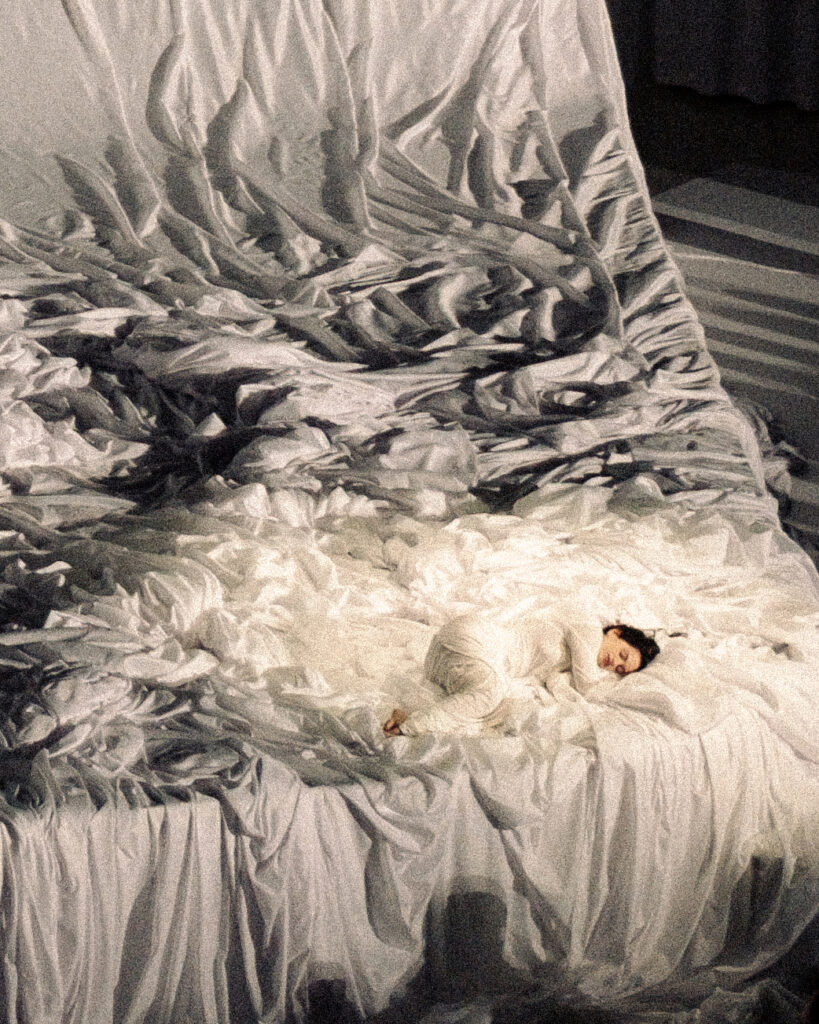
In the uncertainty about what is ‘true,’ art gains weight. She does not have to prove anything. She claims no conclusive truth, but endures doubt, ambiguity and contradiction. Not an argument, but attention. Not certainty, but humanity.
That may well be the story of our time. Precisely in art, theatre and music, the human gains urgency. Or, as singer Rosalía recently put it: ‘aggressively human art’. About her album Lux from 2025 she said in an interview: ‘There’s no AI at all, it’s a human album.’ A statement that would have sounded peculiar ten years ago, but now feels like a manifesto in a time when AI artists enter the charts and algorithms dominate our streaming services. Rosalía made Lux as a counter-movement. She chose acoustic instruments, strings, choirs and live recordings, in which you can hear breathing, the wood of the instrument, small shifts in timing. The human is present. You want to be there.
Each time new technologies emerge, it is thought they will take over culture. Photography would displace painting, film photography, AI the artist. And indeed: much art, literature and music is now being made with or by AI. But beneath that technological excitement, something else is taking shape. It is striking how a mainstream name like Rosalía makes such an explicit artistic position of humanity. She became mainstream, incidentally, without simplifying herself. She moves between thirteen languages, including Spanish, Arabic, Ukrainian and German, and combines techno with classical orchestras and flamenco. And with that, I like to call her ‘aggressively human’ method the canary in the coal mine.
This is an article from See All This #41, spring 2026.
Recent stories
-
![]()
-
![Spread uit See All This no.40. foto: Katerina Bezedei]()
-
![]()
Rituals: ‘Not static or nostalgic, but alive’
-
![]()
Self-discipline: ‘Reality, rhythm and roots’
-
![]()
-
![]()
Nature: ‘An equal co-creator’
-
![]()
Collectivism: ‘Not driven by ego’
-
![]()
Animism: ‘Reverence for the forest and the river’
-
![]()
Human vs. machine: ‘The hopeless future’
-
![]()
Metamorphosis: ‘Manipulation is timeless’
-
![]()
Art Unlimited: Editorial #41
-
![]()
Asma’s Beauty Case: ‘History moves slowly’
-
![]()
BREAKING #307: ‘We are in what passes away’
-
![]()
BREAKING #306: ‘I’m not a performing monkey’
-
![]()
BREAKING #305: It grew dark, but we didn’t need any light.
-
![]()
Li’s Forecast #8: Patterns in textile
-
![]()
Asma’s Beauty Case: ‘Who am I actually working for?’
-
![David Claerbout The Woodcarver and the Forest]()
There’s No Movement Without Friction: Director David Claerbout on ‘The Woodcarver and the Forest’
-
![Magdalene Odundo, Untitled #7 (1994)]()
BREAKING #304: ‘If you have not stood face to face with something, it has simply not truly been known by you.’
-
![]()
BREAKING #303: ‘That dizzying, hopeless procession of transformations’