Product:
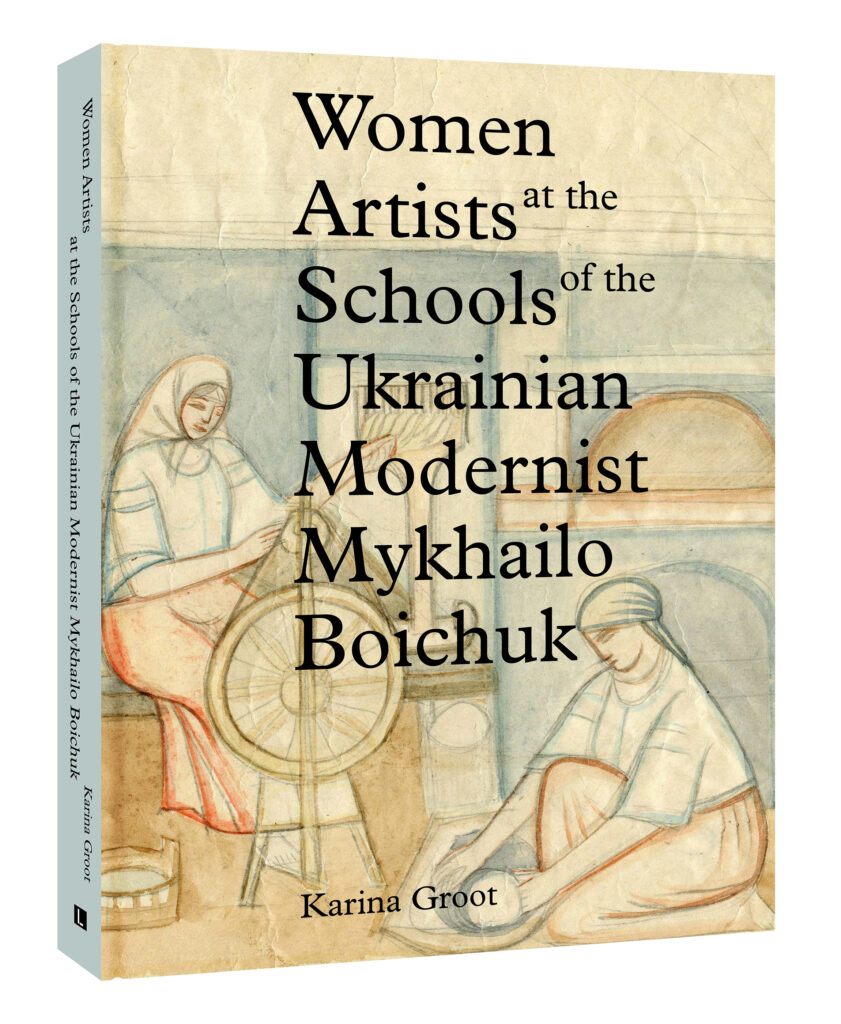
This book recounts the dramatic life stories of thirteen female artists who studied at the schools of the Ukrainian modernist Mykhailo Boichuk (1882–1937). Taken together, these stories provide an insight into Ukraine’s sole and significant modern art movement, ‘Boichukism’.
Boichuk founded his modern art movement in his three-room studio in Montparnasse, which he had transformed into a ‘medieval workshop’. The students at his ‘School for the Revival of Neo-Byzantine Art’ studied historical fresco and tempera techniques from Italy and Byzantium, and used classical recipes to make their paints, with ingredients such as plant extracts and garlic juice.
Although his school was successful in Paris, Boichuk soon returned to his homeland. He wanted to ‘give back’ Ukraine’s art to the country. In Paris, he suddenly saw with crystal clarity the unique characteristics of his own culture, namely Byzantium as the cradle of Ukrainian art.
Boichuk developed a national style of painting in Ukraine. His modern artistic movement became a central feature of the cultural revival of the 1920s. It flourished whilst Ukraine was fighting for its independence (1917–1921) and the Soviet government was promoting the Ukrainian language and culture through a ‘policy of Ukrainisation’ (1922–1931), but came to a tragic end during Stalin’s reign of terror.
Boichuk and his students were persecuted, imprisoned, tortured or murdered because of their ‘formalist’ style. Their art was destroyed and murals were painted over or scraped off the walls.
Now that Ukraine is once again fighting to preserve its cultural identity, it is once more crucial, in the spirit of Boichuk, to give the country back its art, to honour it and to take pride in it.
This book aims to contribute to that.